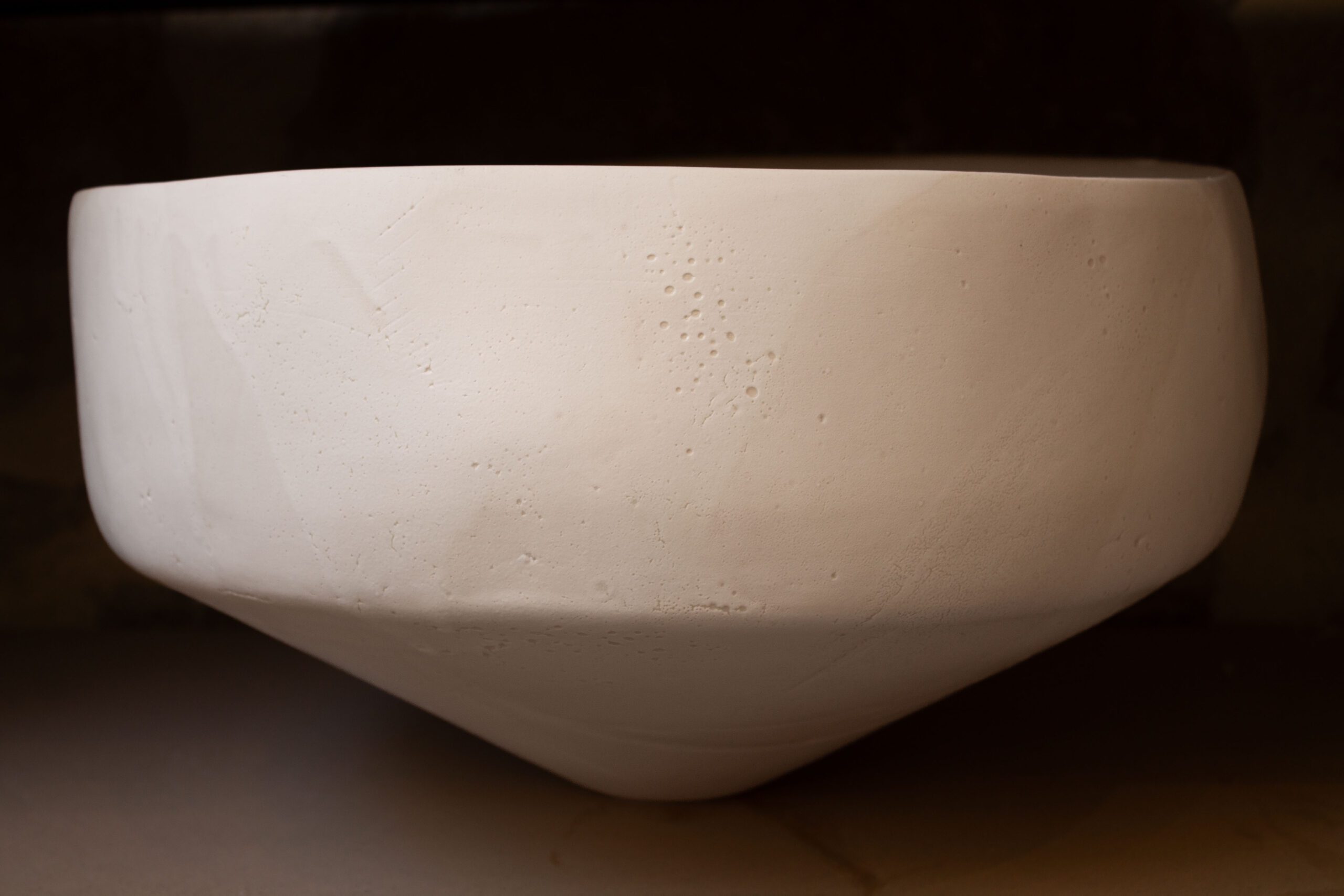
Repose: How would you describe what you do?
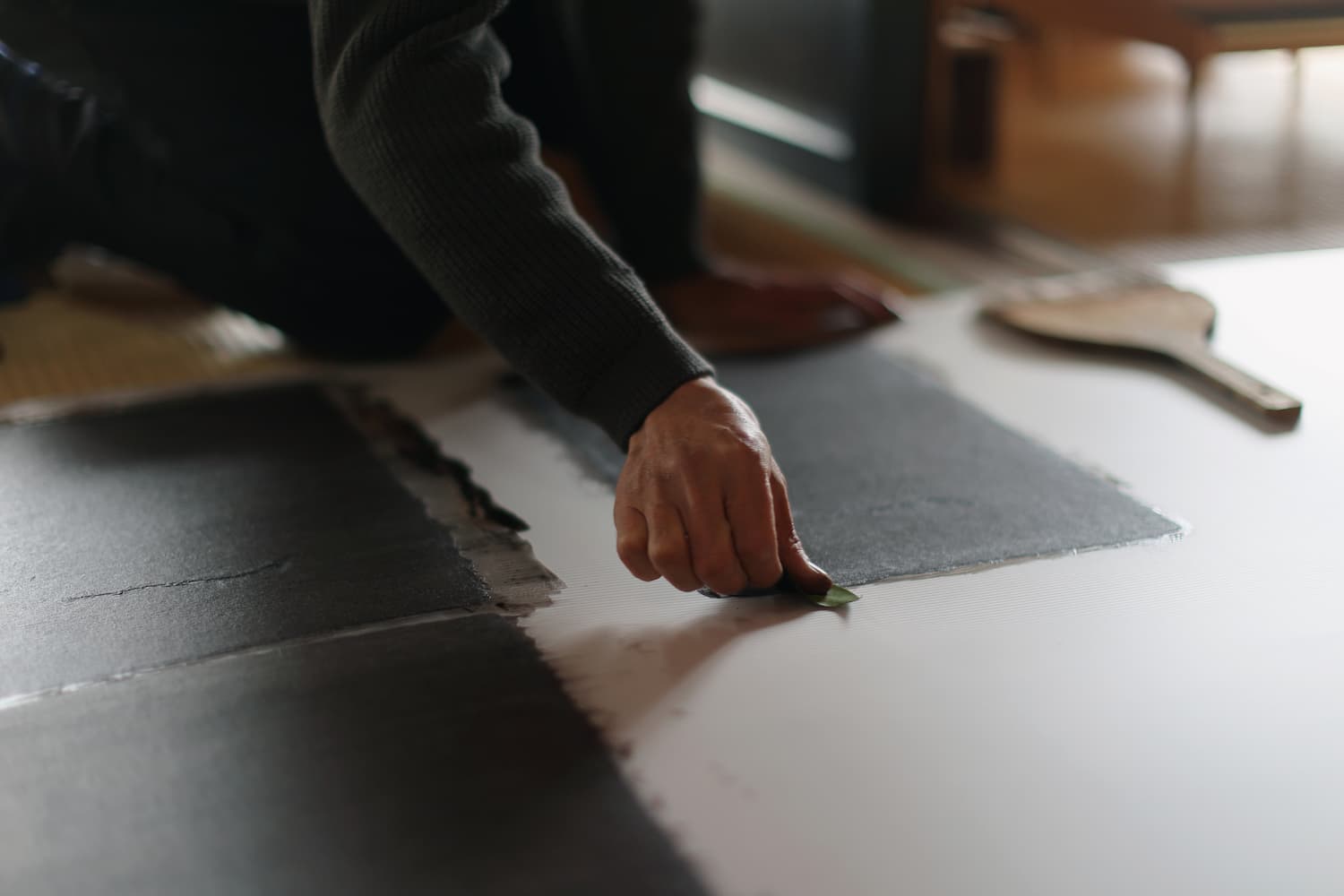
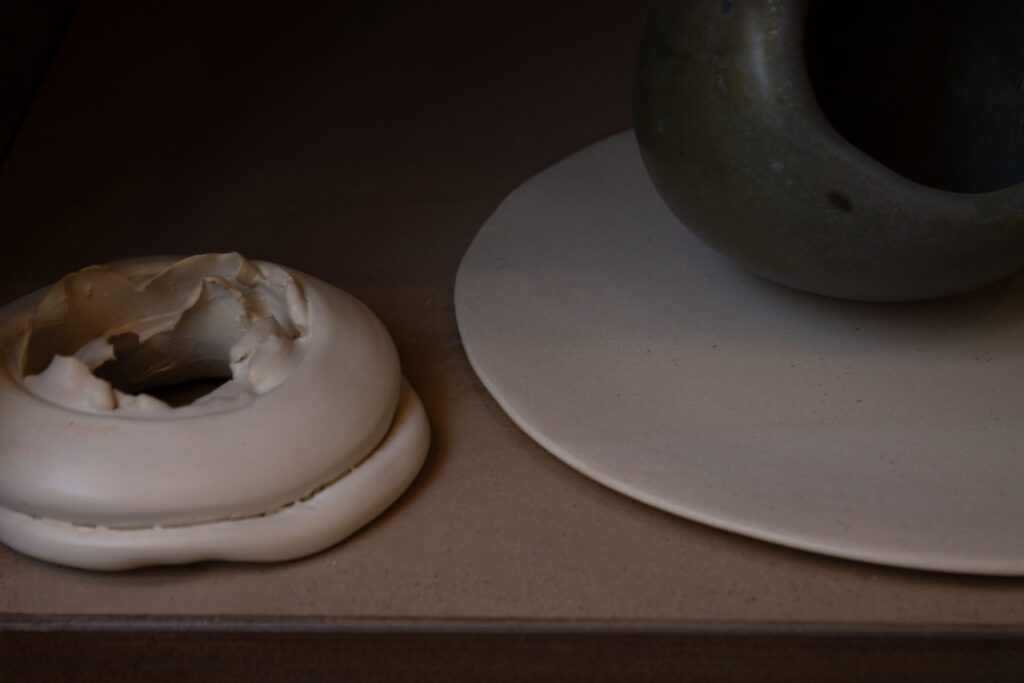
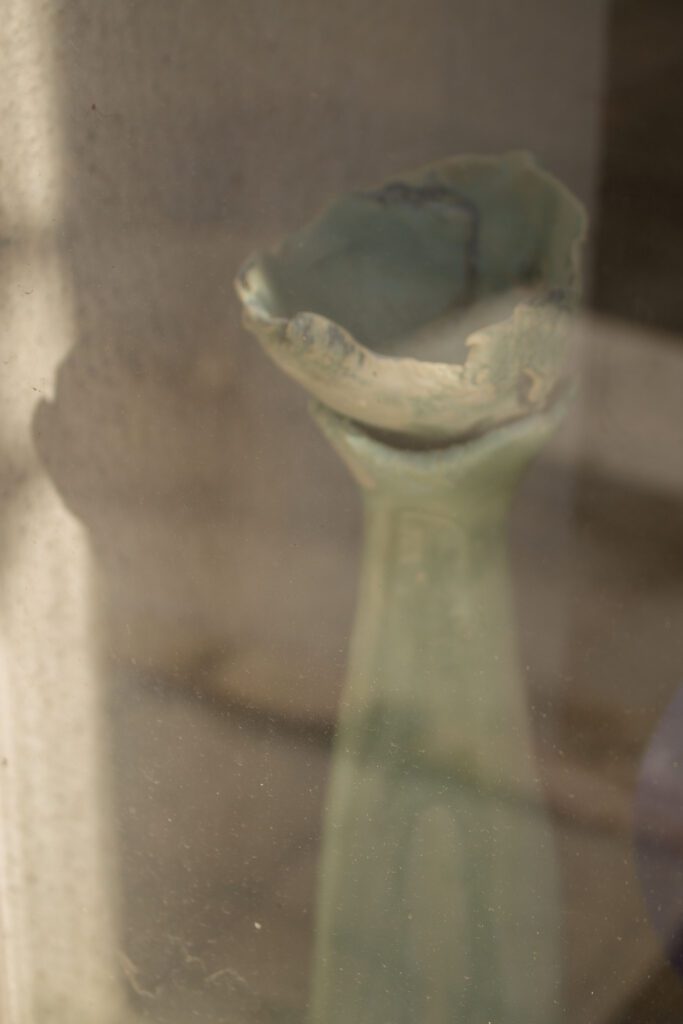
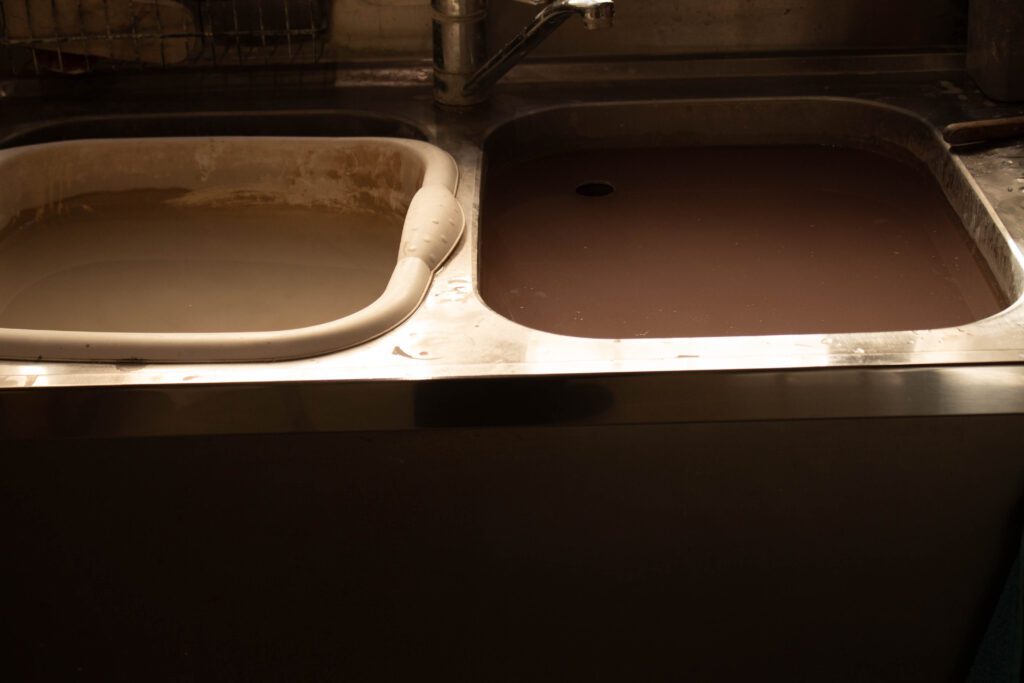
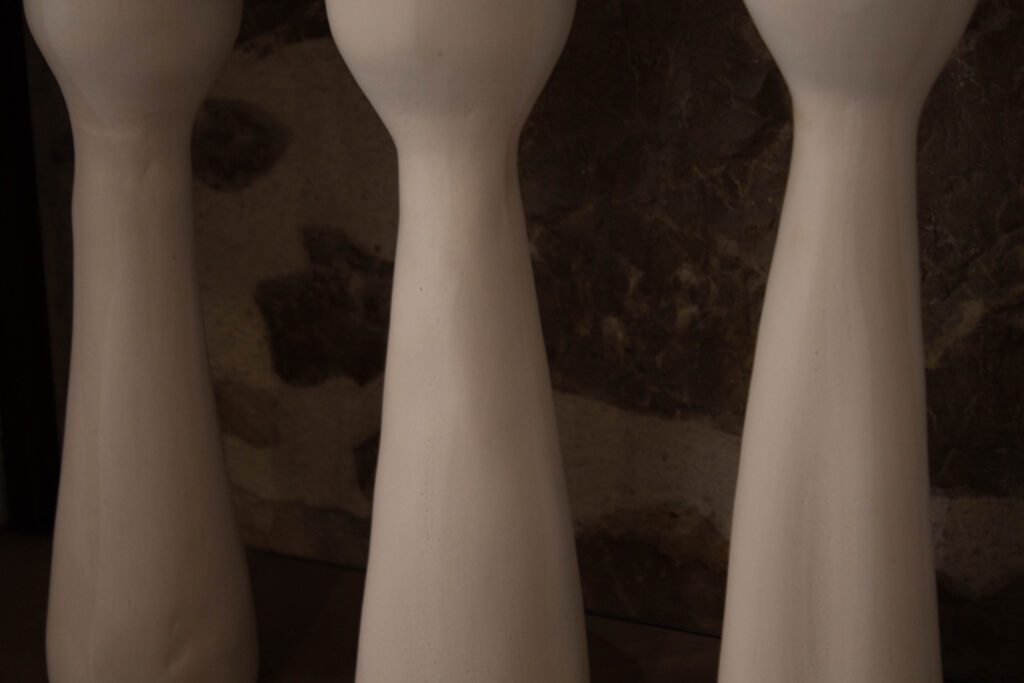
Mounia: I’m a ceramicist. For me, working with clay is first a physical connection with the material itself, this earth that comes from the magma of our planet. It brings us back to our own grounding as humans. In a world where everything becomes dematerialized, touching clay is a way to return to something essential. It’s an intuitive source of inspiration, not an intellectual one, even though I used to be a genetics researcher. I changed my life at forty, leaving science to become a ceramicist. Clay allows me to quiet the mind and create from the body and intuition. It’s an extraordinary experience.
Repose: How did this transition from scientific research to ceramics happen?
Mounia: I don’t think the shift is as big as it seems. Researchers and artists share a lot, curiosity, freedom, the drive to explore what isn’t known yet. I left research because I felt constrained by the system, the lack of funding, the politics. Freedom is essential for me. I had always sculpted on the side, so I decided to leave one passion for another. I studied ceramics in Paris, including the functional side of the craft, which is easier to sell.
Repose: Do you face any challenges when communicating your project?
Mounia: Communication is very hard for artists and artisans. We live with doubt, and it’s difficult to “sell” ourselves. At first, my network grew through word of mouth. I’m social, I went to exhibitions, cafés, I talked to people, I invited them to my studio. Later, I tried to build my website myself, which was a mistake, it took too much time. Then Instagram appeared, and a student of mine, who is an interior designer, taught me how to use it.
Repose: How has your project evolved with time?
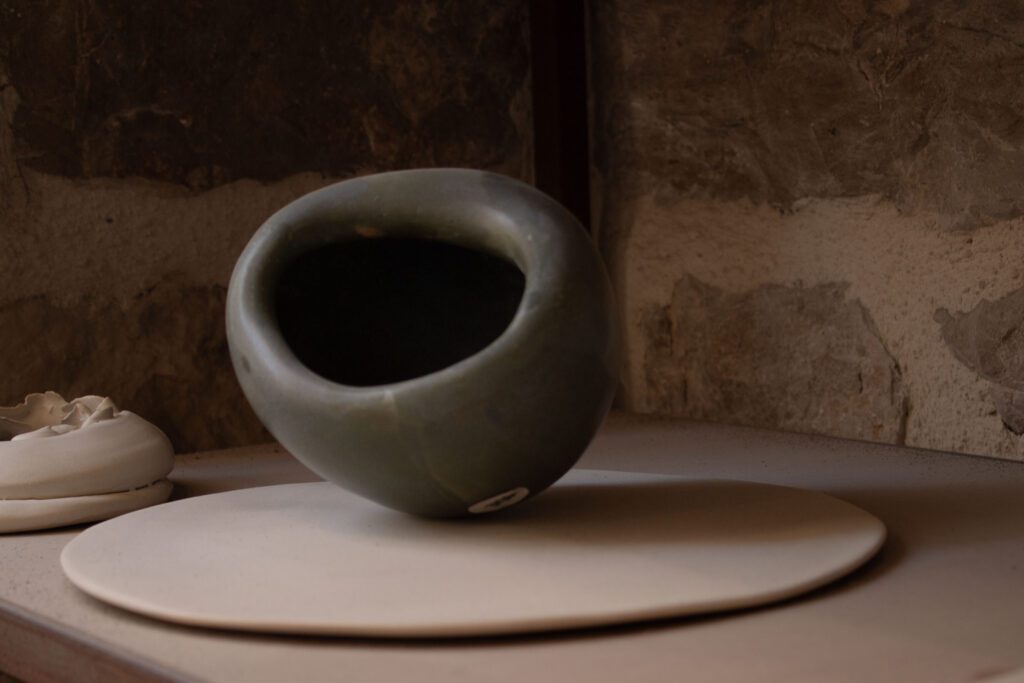
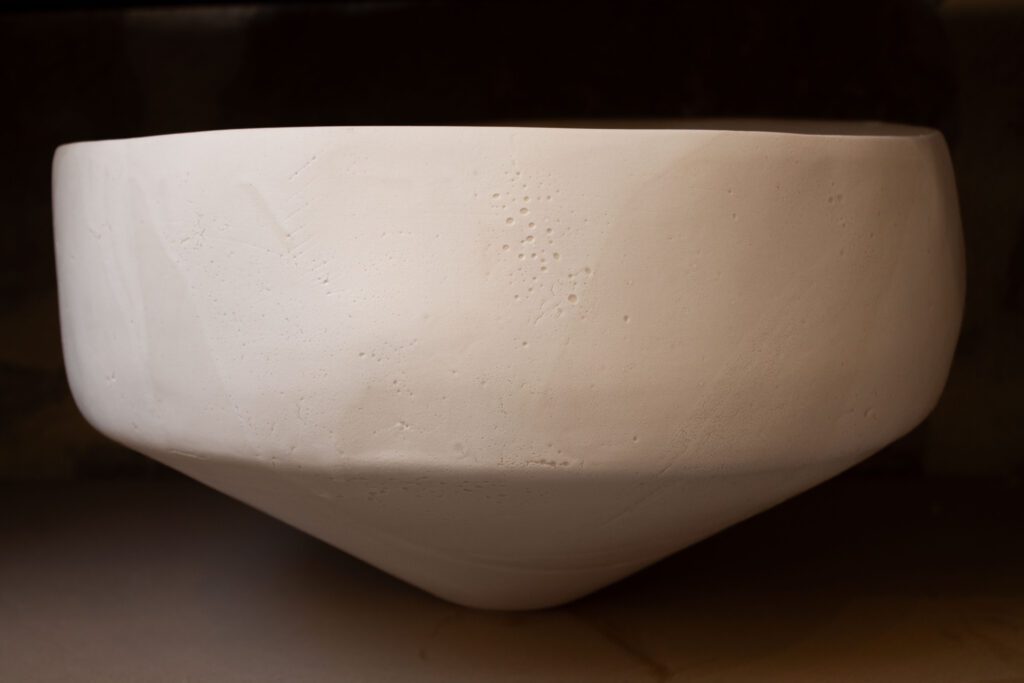
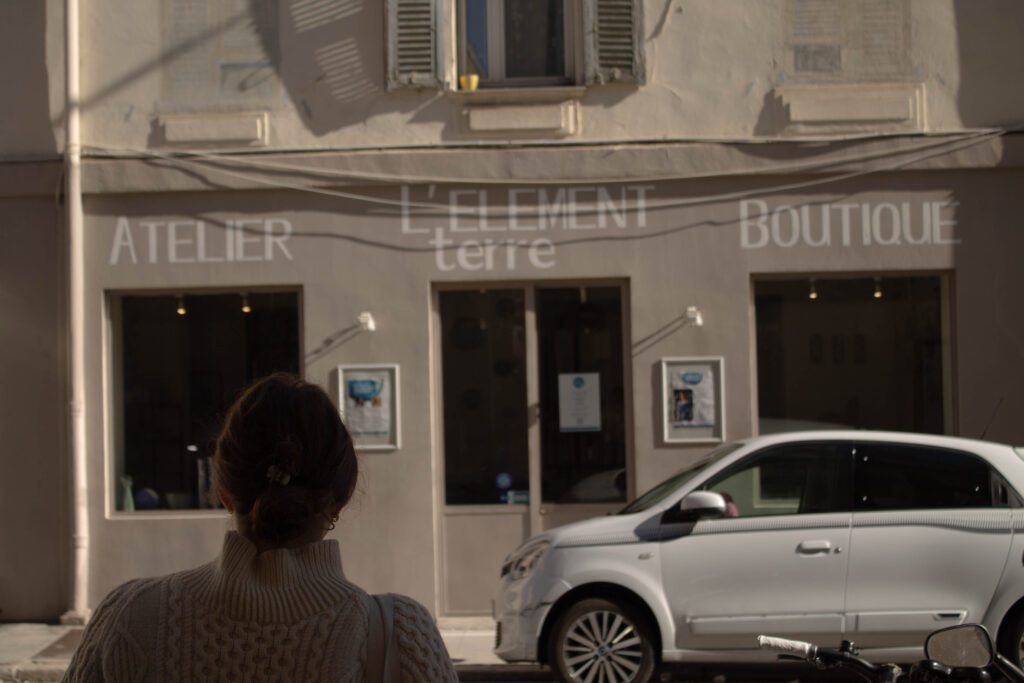
Mounia: In two main ways. First, the context has changed, ceramics has become very trendy, there is more competition, and since Covid people move around less. Many ask questions online instead of coming to the studio, so I spend more time in the digital world and less with the clay. Second, my relationship to my work has shifted. In the beginning, I made many small, inexpensive pieces, I had a lot of visitors, and I ended up spending too much time selling rather than creating. I decided to produce fewer but larger pieces that I truly love, and to teach more to balance my income. Teaching is not a burden, I enjoy it, and it feeds my creativity. My studio has also become more of a community space, with students, open workshops, and collaborations. I love that.
Repose: How do you find balance between creativity and teaching?
Mounia: It’s challenging. I’m a single mother with a nearly twelve-year-old son, so I have to finish early and manage everything alone. That leaves less time for creating. But life is long. Some periods are for transmission, others for creation. Often I create alongside my students, we co-create, there’s shared energy. I’m not attached to the final object, but to the moment of creation. I also dance a lot, especially tango, which is another form of expression deeply connected to the body. It’s similar to working with clay, the axis, the breath, the connection. I sometimes collaborate with artists from other fields, dancers, writers, and I want to explore more interdisciplinary projects.
Repose: What would you tell yourself at the moment you started?
Mounia: Probably not to do everything at once. At that time, I moved, had a young child, went through a separation, opened a studio, changed careers, it was volcanic. Maybe I could have spaced things out. But life happens, and when we’re in the flow, we follow it. The important thing is to keep your vital energy and find moments to recharge. Clay helps immensely with that. It’s a mirror, it reflects exactly how we feel. You arrive stressed, you touch the clay, and you come back down. It’s a form of meditation.
Repose: Do you have plans for the future?
Mounia: Nothing fixed. I move intuitively, just like in my work. Maybe everything will change in six months. What interests me now is collaboration, crossing disciplines, linking poetry and ceramics, or creating workshops that blend tango-connection with clay work, exploring what happens when you touch the material, close your eyes, and let the body guide.
Repose Archive is a creative direction journal documenting processes and projects across art, design, architecture, and hospitality. As designers, we interview creative minds and explore purposeful creation.