
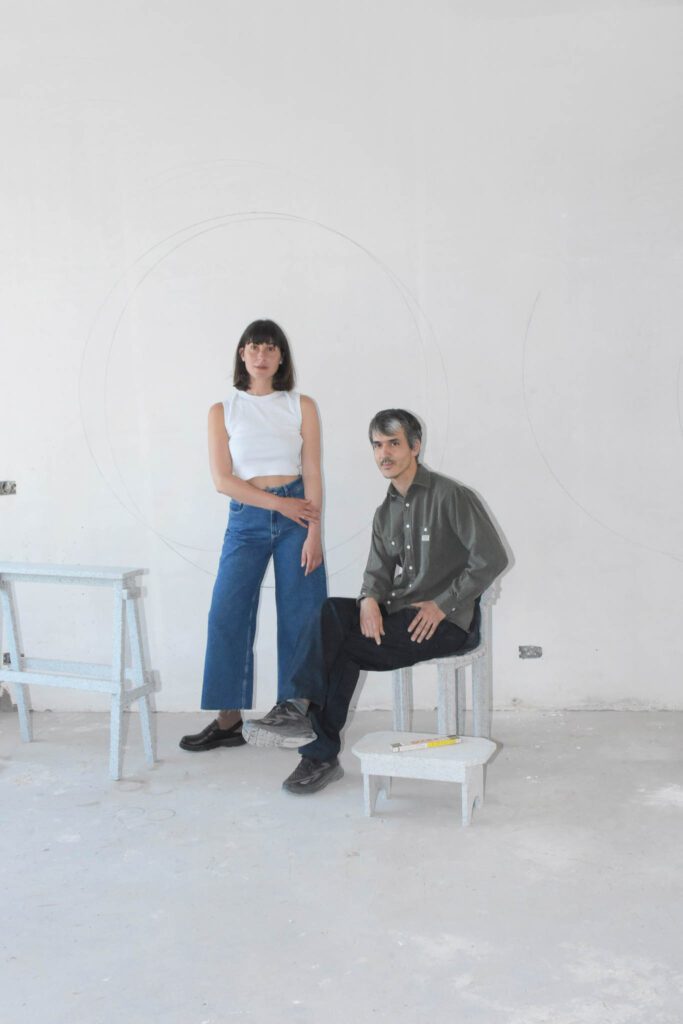
Badii Rabán is an Argentinian design and material-research studio founded by Delfina and Gaston. Together, they explore the possibilities of stone through an investigative approach. In this interview, we speak with them about the origins of their studio, their shared fascination with investigation, material processes and the social impact of their work.
Repose: How would you describe what you do?
Delfina: For me it’s like a design practice, a practice mainly centered on researching materials, mostly focused on stone because of Gaston’s connection with stonemasonry. But beyond stone, there’s also a very investigative intention through the material.
Gaston is the fifth generation in his family’s stonemasonry trade and he also studied architecture. I studied design and then did a research master’s, more research-oriented within design, not so much design as the final product, but as a very important preliminary stage.
And even if there is an artistic vein within stonemasonry, Gaston brings something totally and radically different from what had been done before because, even considering that artistic side, which you can see in funerary art, for example.
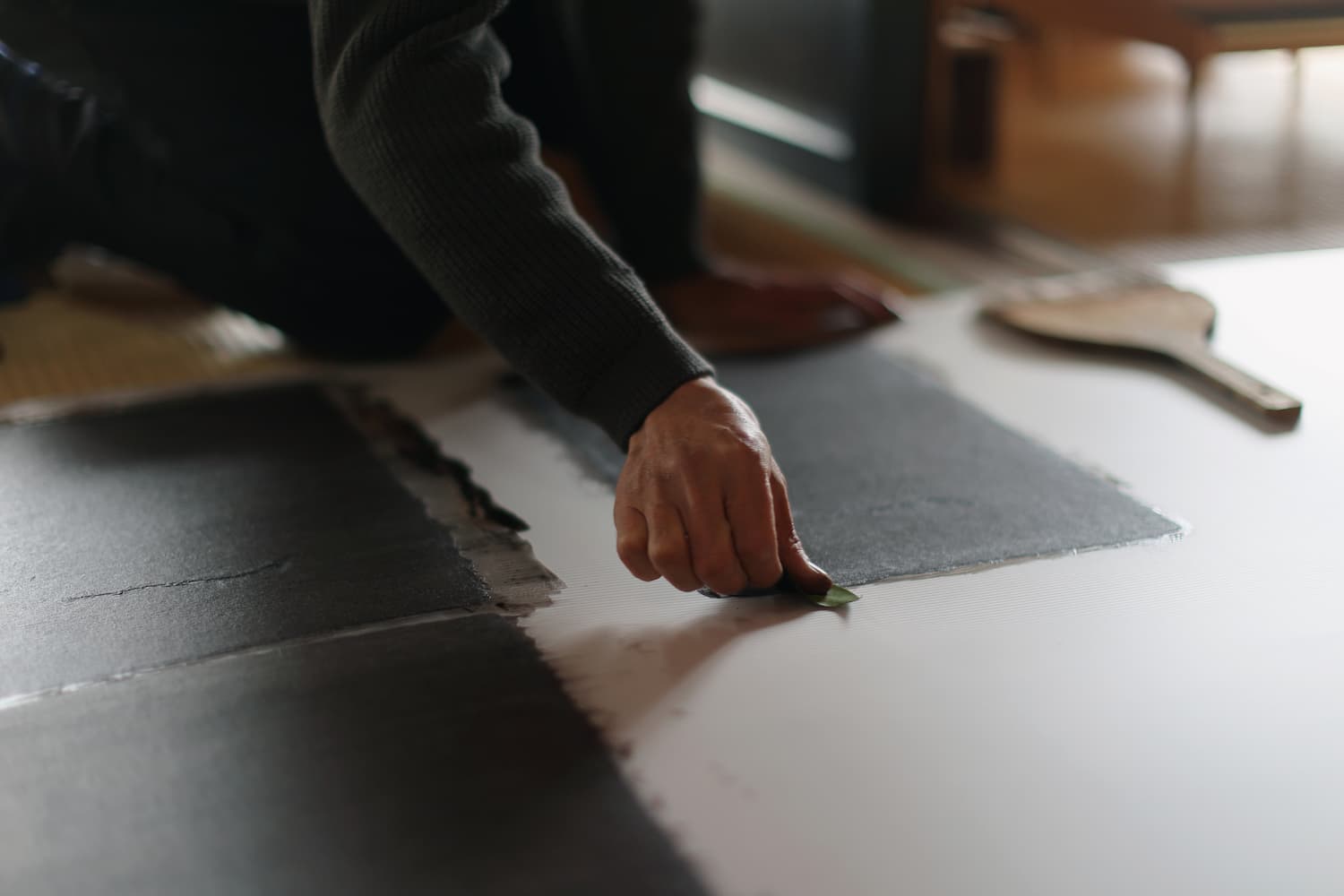
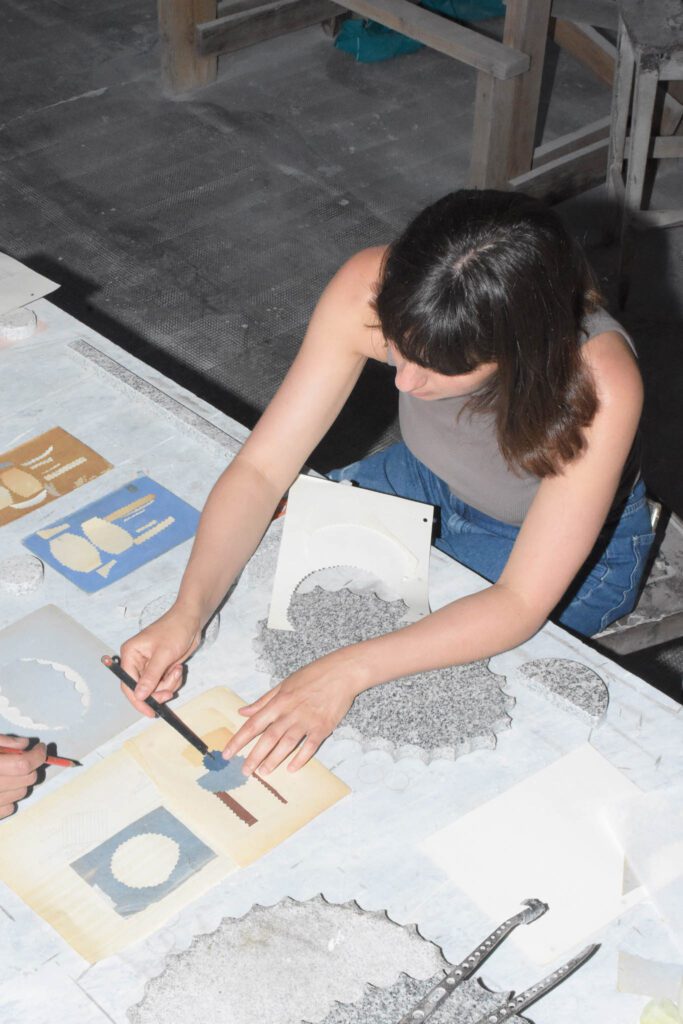
Gastón: It was also about letting go of the family mandate. What I always liked was pushing the material to its limit. With the first paycheck I earned in the stonemasonry, I bought a restoration book, took data from that book, and experimented with it, what happened if you applied acids, how it broke, understanding the differences between stones.
That research, when Delfina and I started working together, I think shifted the focus away from design.
Repose: How did the idea for this project come about?
Delfina: I was working at a studio and Gaston was one of the designers there. I had just arrived from abroad and was really wanting to do something related to research and design. I didn’t want to make products, I wanted to do research in design. And here the design scene is very tied to a more product- or industry-oriented mindset. At the time it was hard for me to find a dialogue with designers from that place.
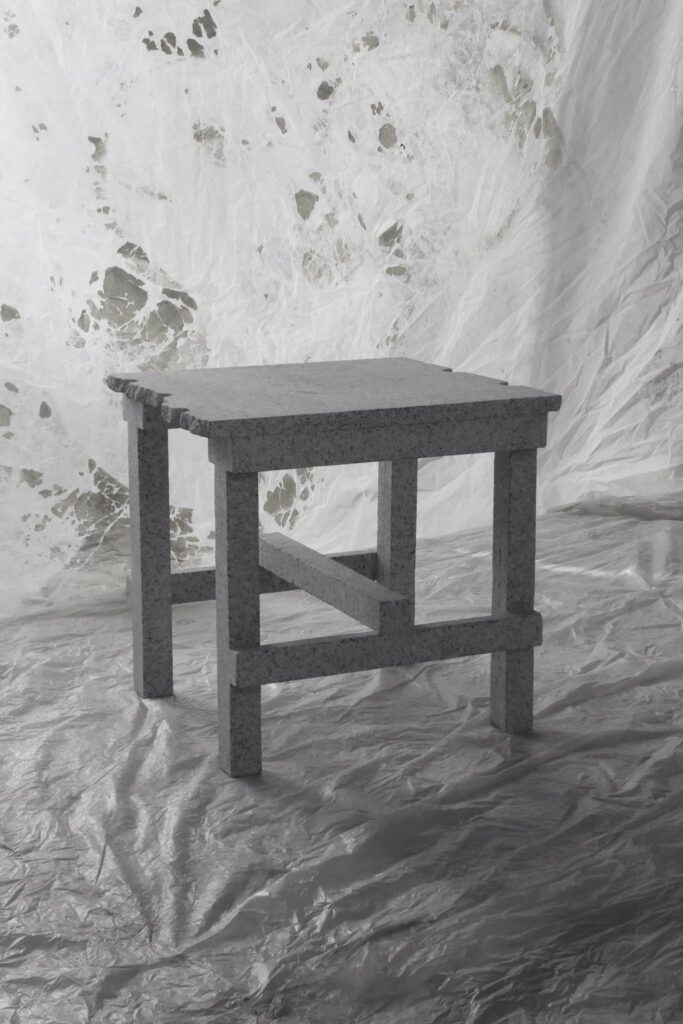
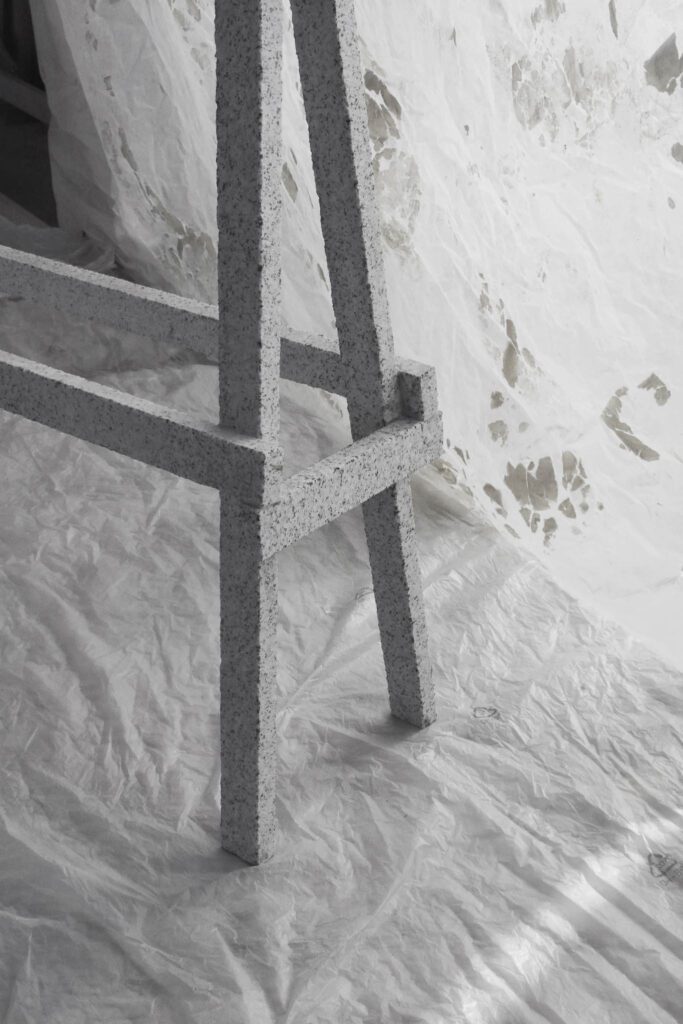
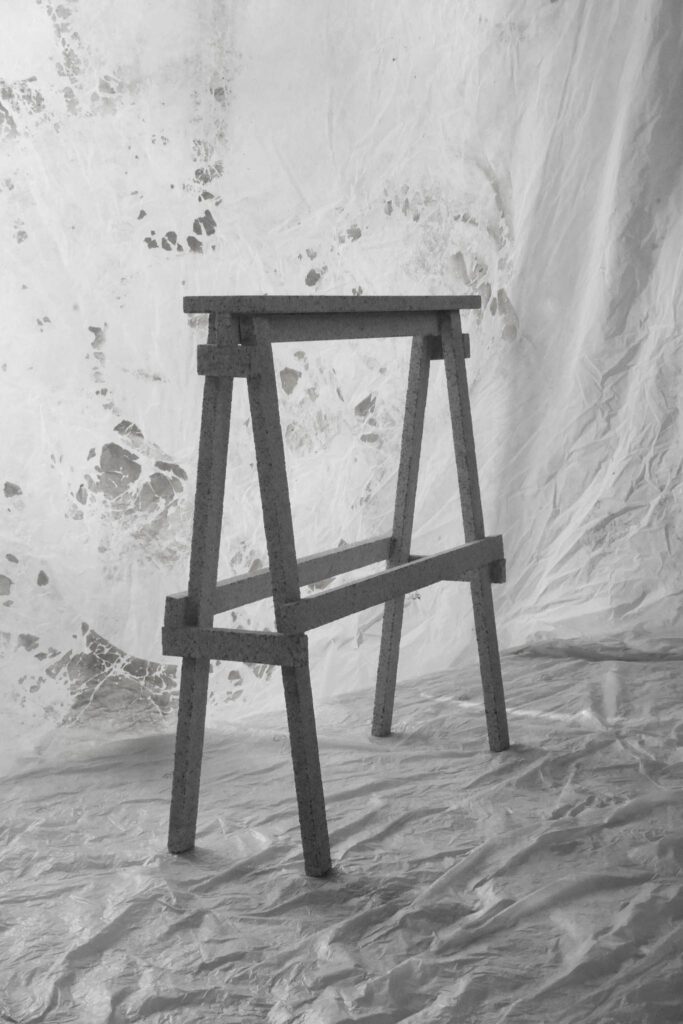
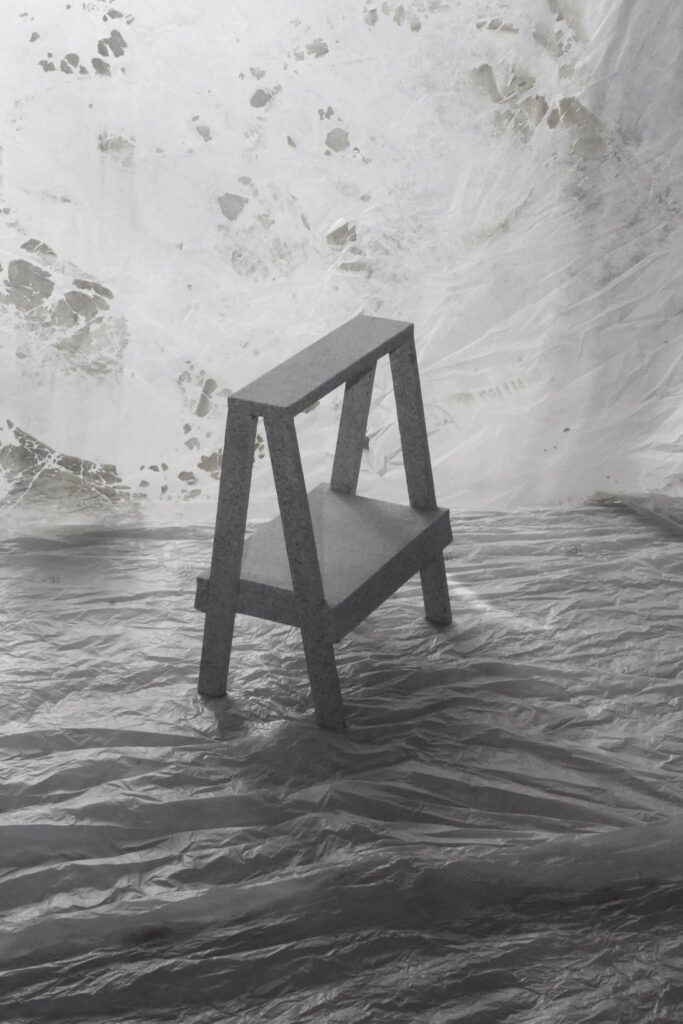
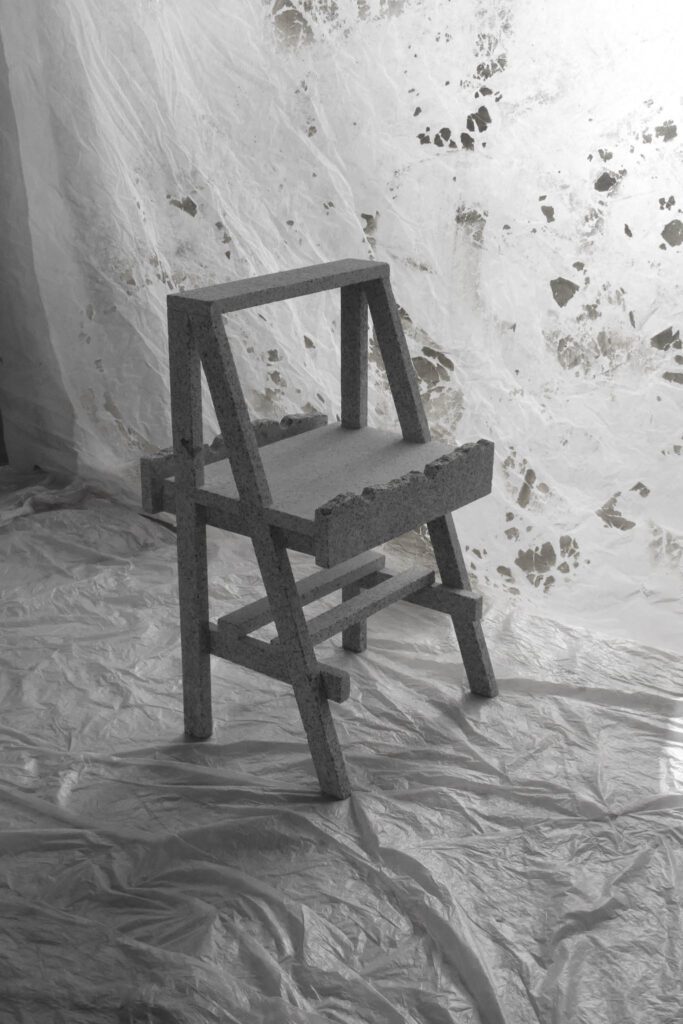
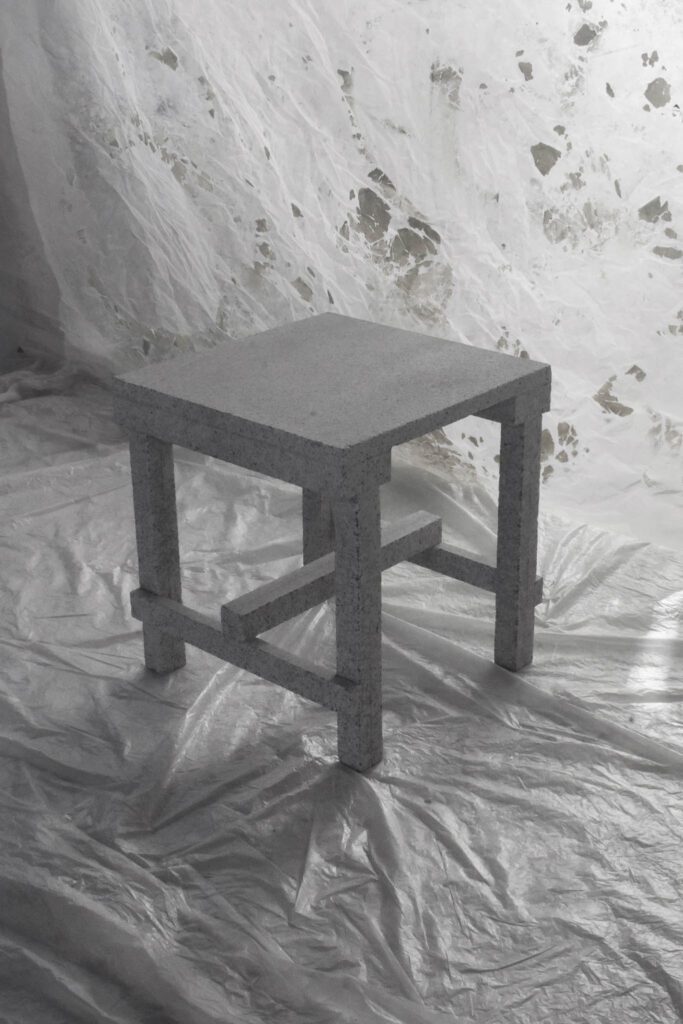
And when I met him, I felt I’d found someone I could talk to about that, and who understood it from a very grounded perspective, probably because his connection to the material. And in that dialogue, those chats, that everyday life as a couple, we started to understand there was something that united us a lot. And that’s how the studio began, with construction-site furniture, which was this search, first simply an intuition or an observation of the furniture made on construction sites. It’s something typical in Argentina, Latin America, or developing countries, because if you compare it with a construction site in a first-world country, they’re provided that furniture; here the builder designs it, he designs his own chair, his table, whatever he needs.
Gastón: We didn’t discover anything, we just observed that pattern. You walk and there are millions of designs, chairs, tables, made by people who didn’t study design, and we realized there was something very authentic about observing that. We created a whole photo archive of everything we saw while walking through the city. We didn’t have a clear idea of what we wanted to do with it. It was just that observation, which we still have with other things that haven’t become anything yet. They don’t have a conclusion yet.
For me it’s very important to encourage those things, if something interests you, even if you don’t know what you’ll do with it, record it, it’s good to turn it into a practice.
Repose: And was the idea of making this series in marble because of Gaston’s relationship with the material?
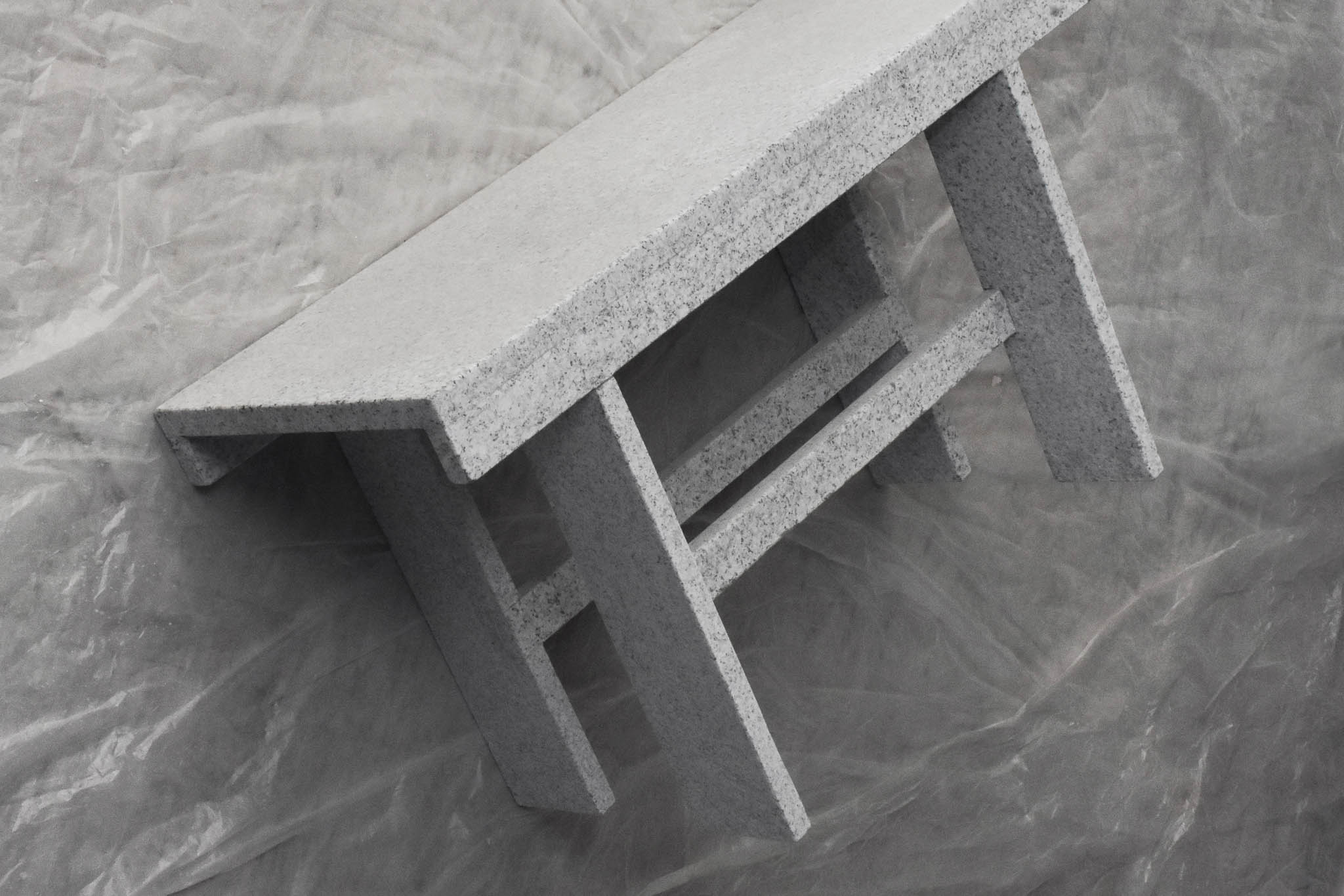
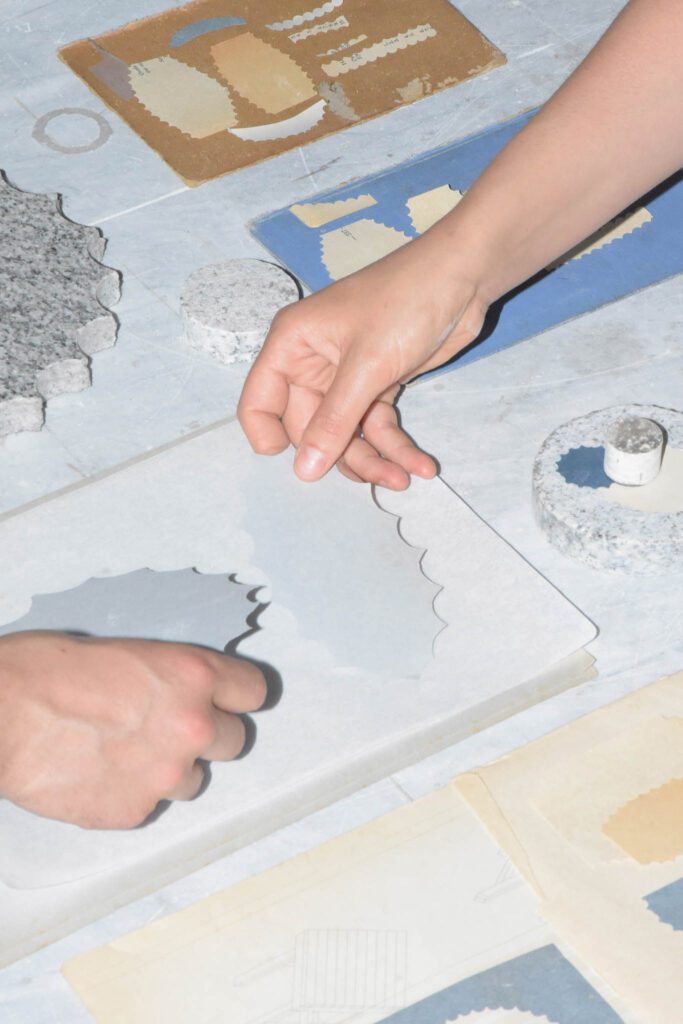
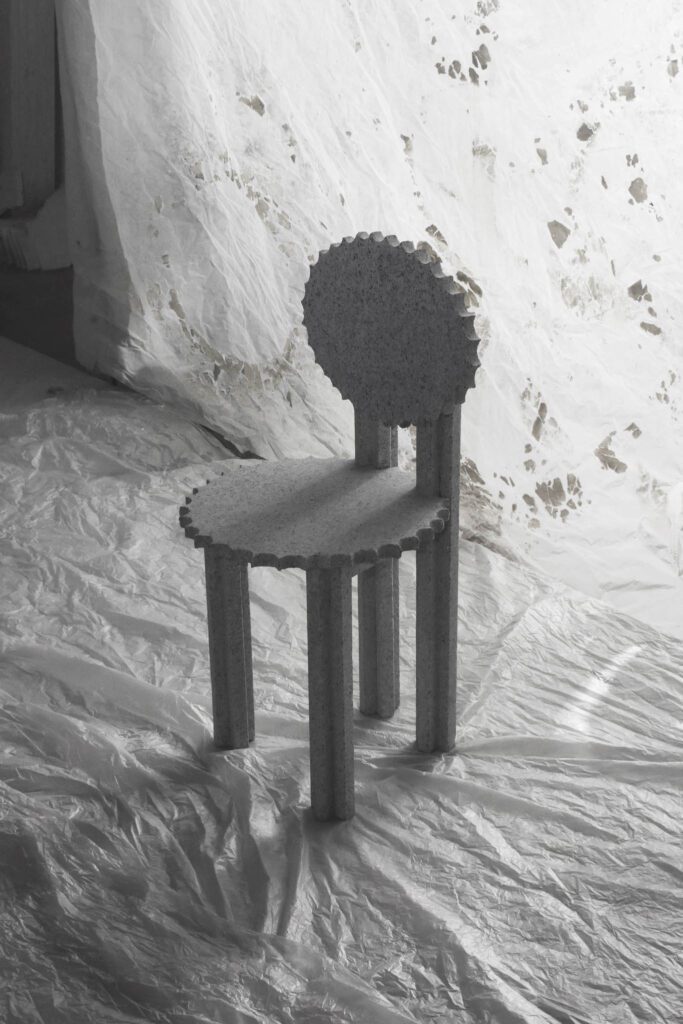
Delfina: Yes. We realized that the qualitative leap of the series, and its conceptual leap, was to transpose those objects into another materiality, because that would give them a new meaning. It wasn’t just about reproducing them; it was also about taking them out of their context, the construction site. The stone we chose is Gris Mara, a granite associated with a certain social class, with a popular world, and with a world, without this being negative, but clearly loaded with negative connotations. While imported marbles, like travertine, are associated with luxury and a more elitist sphere.
That’s where research becomes super important, because that’s where you gather the social context and cultural appropriation that exist through a material. It’s not the same to design in travertine as to design with Gris Mara. There’s also a position there, I would even say a political one. It tells a whole story and brings forward a materiality that has always been in the background. An industry that has always been in the background because the fact that Gris Mara has that connotation creates a poorer national industry and a richer one based on imports. When the currency levels out and more is brought from abroad, people start choosing the imported one because it’s more expensive, not because it’s better. It’s also a critique of architecture, the poverty of development in our country, like recycling the same material, always polished, despite its age, which limits the possibilities of a material.
Gastón: And that’s also material research: having a material and asking yourself in how many ways it can be used. Gris Mara takes on a morphology that makes you stop associating it with a kitchen countertop simply because of an operation we applied to the material. We had never seen it like that because Gris Mara is a national material, so you’re not going to find it elsewhere. That’s why I think the series received so much respect internationally.
Repose: How is the series composed?
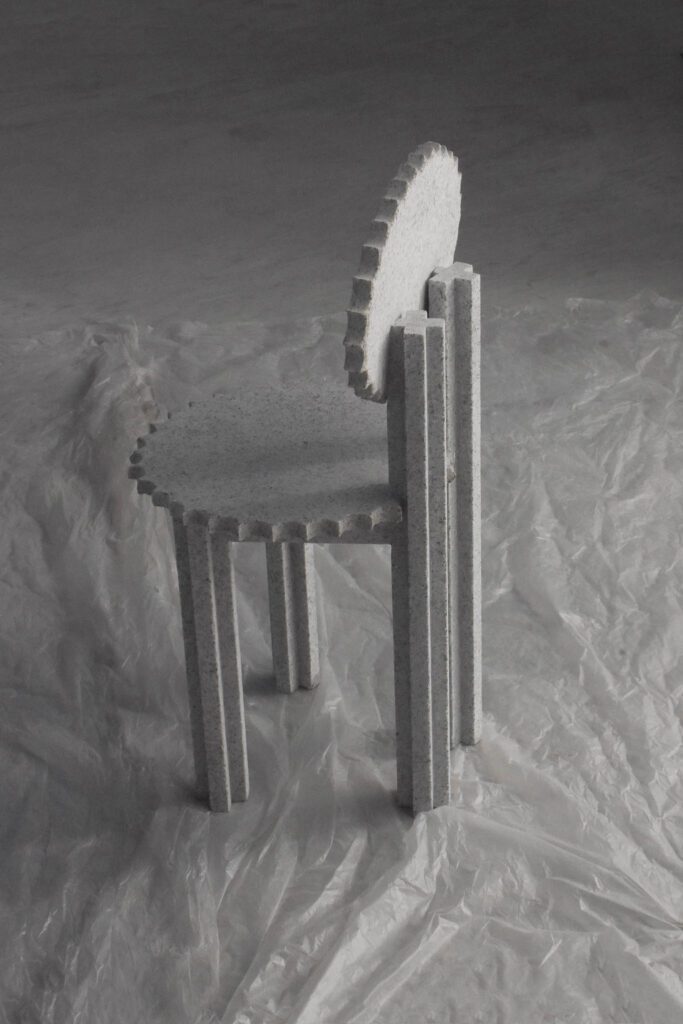
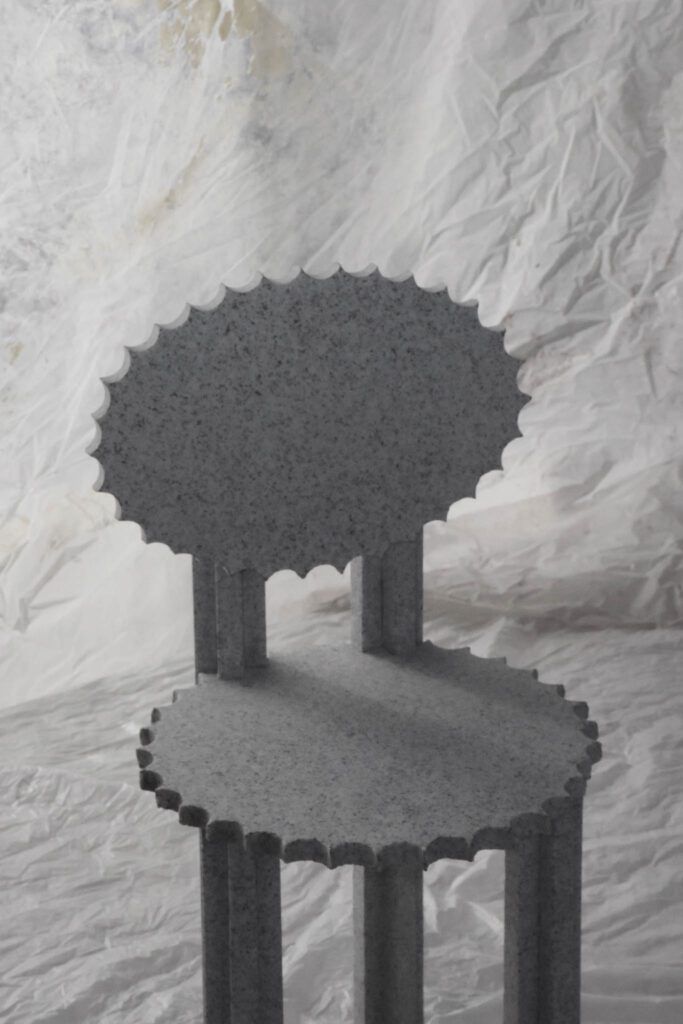
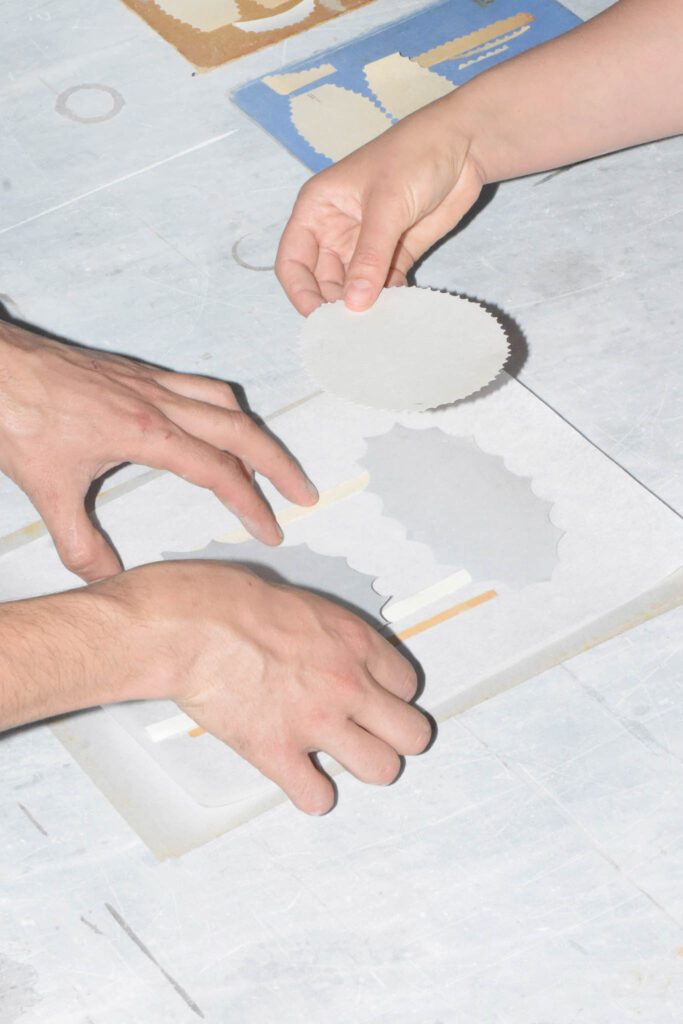
Delfina: They are 15 pieces. Thirteen are replicas of the different types of construction-site furniture we catalogued, stools, sawhorses, tools, all those things we collected. Then we were invited to a group event titled fantasy, so for that exhibition, apart from “the little workers,” as we call the 13 replicas, we decided to make two more pieces, a little more free, stepping away from literal reproduction. That’s where the Fantasy Chair and the half-moon stool were born. We also made them in Gris Mara because they still belonged to the series, but we called them “fantasies” because of the exhibition, and we used a beautiful scrap piece that comes from cutting out a sink.
Repose: What are your creative processes? Where do you find inspiration?
Delfina: Life. We read a lot, fiction, essays, botany, which always triggers things.
Gastón: I really enjoy being in cemeteries. It’s a nice practice when you visit a city or town, cemeteries reflect a lot about the city’s urbanization. And there’s a gesture in the way people walk that interests me. It’s a different moment and it’s there because probably the city didn’t have urbanistic development. Those gestures are what I like. I love going to a new city, anywhere in the world. There’s always something there that makes you think about how people walk through cities.
Repose: What is a typical day like for you?
Delfina: I think we need routine and non-routine in equal measure. That balance is essential to not burn out, either from the routine of waking up, designing, making, or waking up in an unknown city, going somewhere, coming back. I always need a mid-morning coffee; it’s an important moment in my day, where I read, look at something, listen to something, where I connect with something unrelated, and then return.
Repose: Now that your project is up and running, do you think it still embodies the essence of the original idea?
Delfina: For me it has evolved really well. I always had confidence, but I struggled more with the confidence in the studio as a life project. Now that’s very established, it responded perfectly to that initial fear. It’s also very important, so the studio doesn’t lose its essence, to know how to say no to certain projects or collaborations. It helps strengthen what you’re building. It may seem contradictory, but if today we were everywhere people asked us to be, I feel we’d be completely lost regarding who we are. We’re more interested in dialogues with small places, small design festivals, small design shops, everything at a small scale interests us. We don’t want to do things big or massive.
Now we’re beginning to understand that this is a life project, and that life needs to be good, in community, with healthy relationships. So it’s not the same when you choose a photographer, or a gallery, or someone to work with, the choice matters. If your ego is so high that you go around saying, “I chose the paper, I chose this, I chose that,” that ego pushes you into individualism, which ends up killing everything. It’s more fun and better for life to share with other disciplines that are fundamental for the project. We can’t do everything. So we’re humble in that way, and we also like what’s close, what we can approach and know, what remains human in scale.
Repose Archive is a creative direction journal documenting processes and projects across art, design, architecture, and hospitality. As designers, we interview creative minds and explore purposeful creation. Photography credits: Guido Grosso Studio 1993