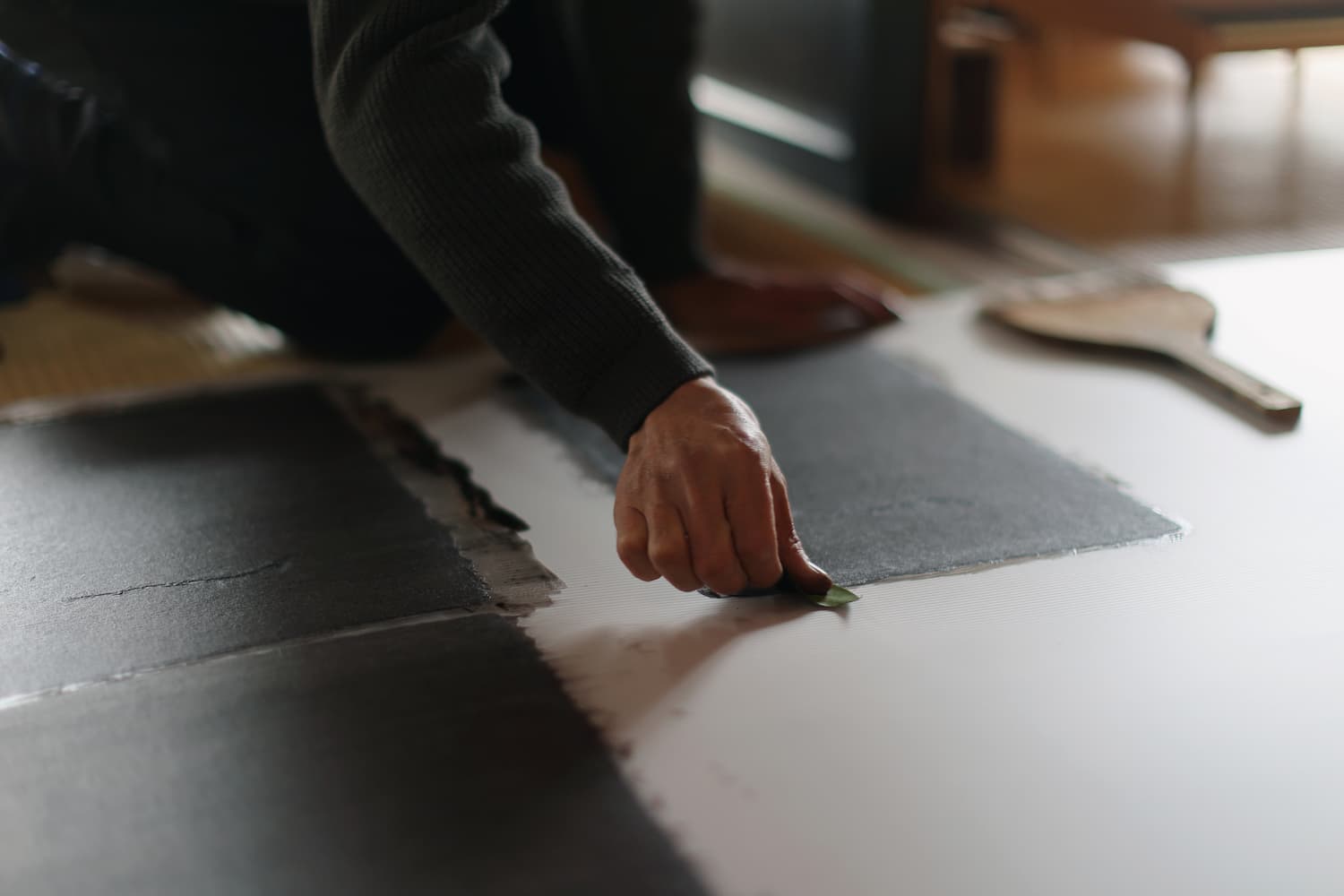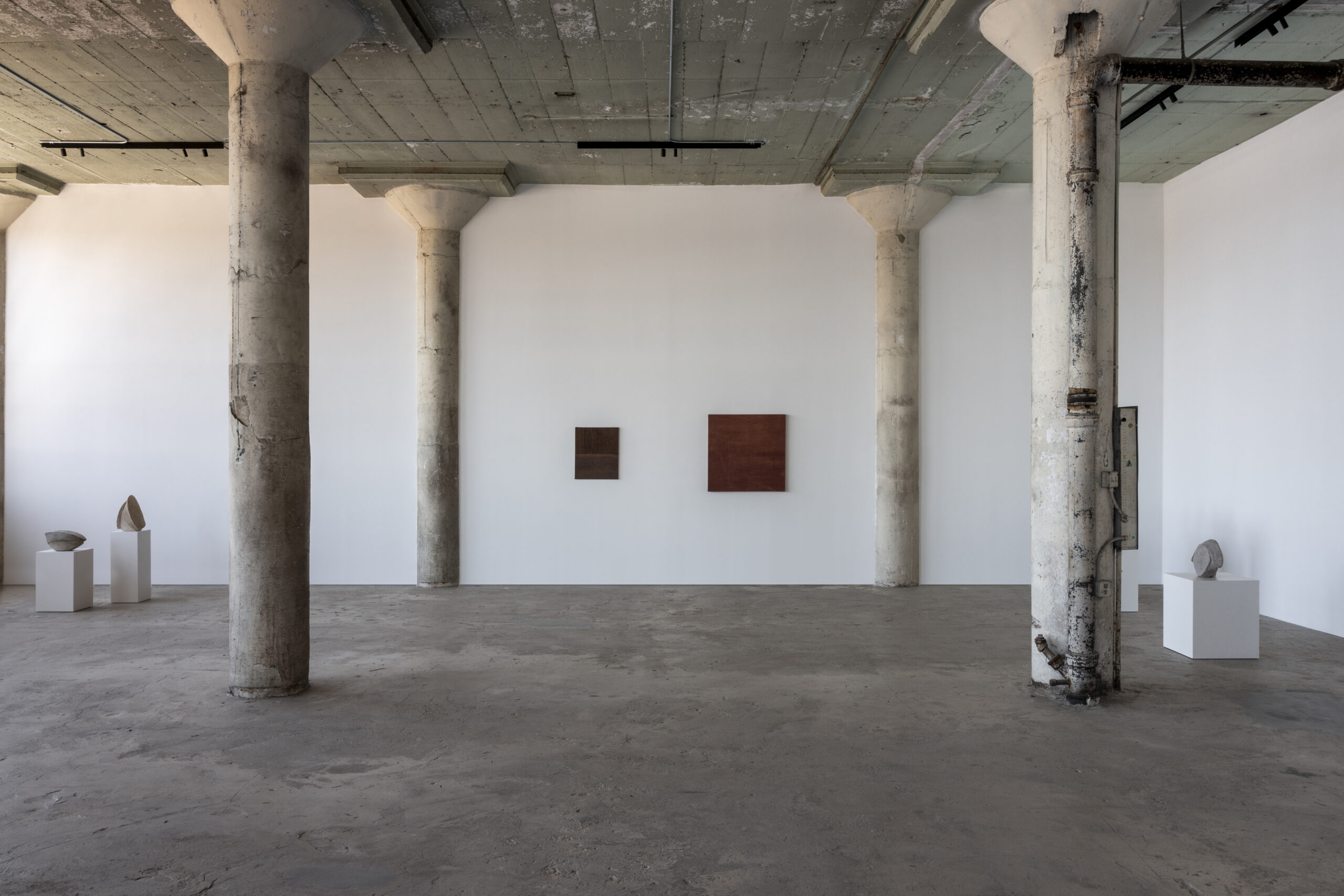
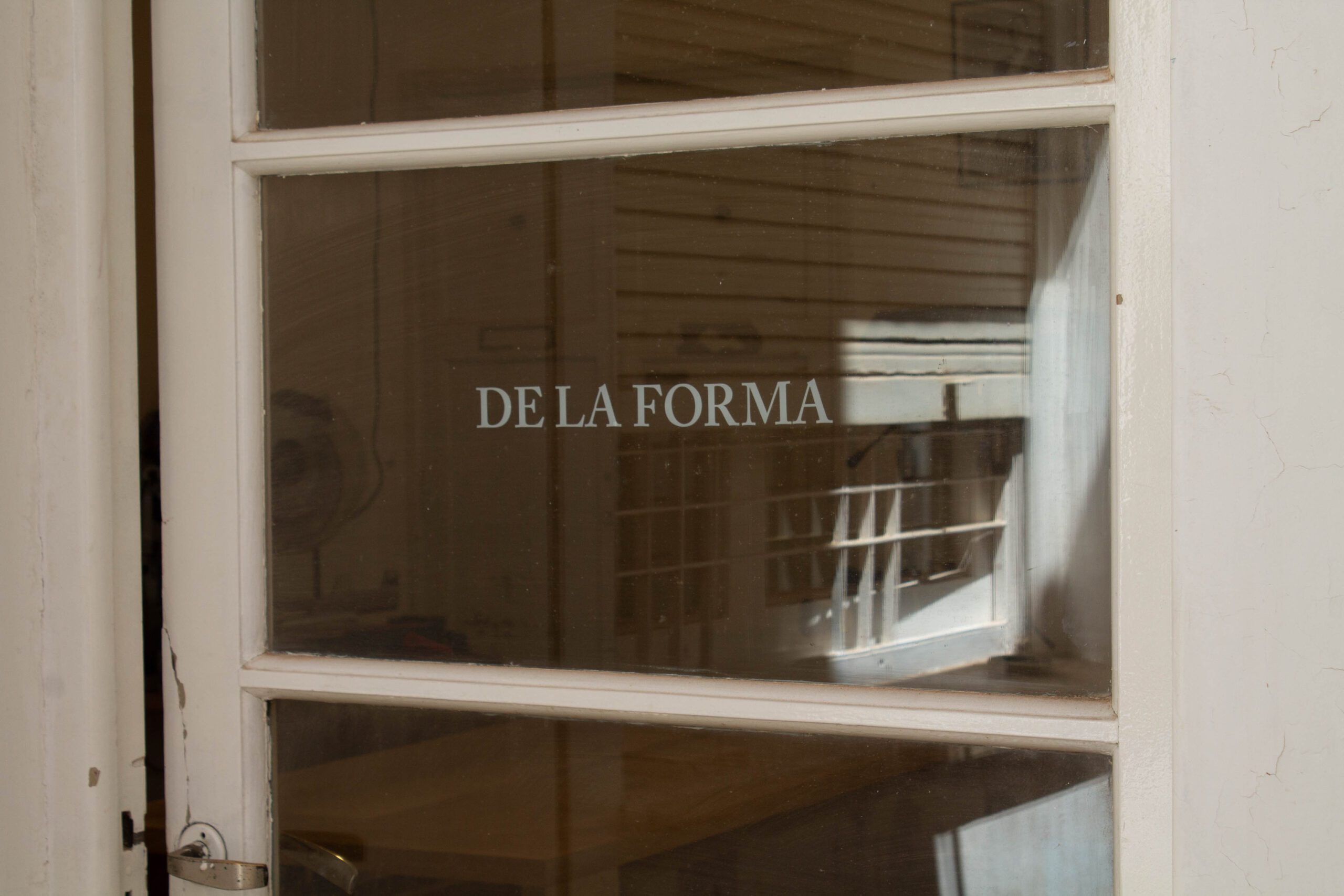
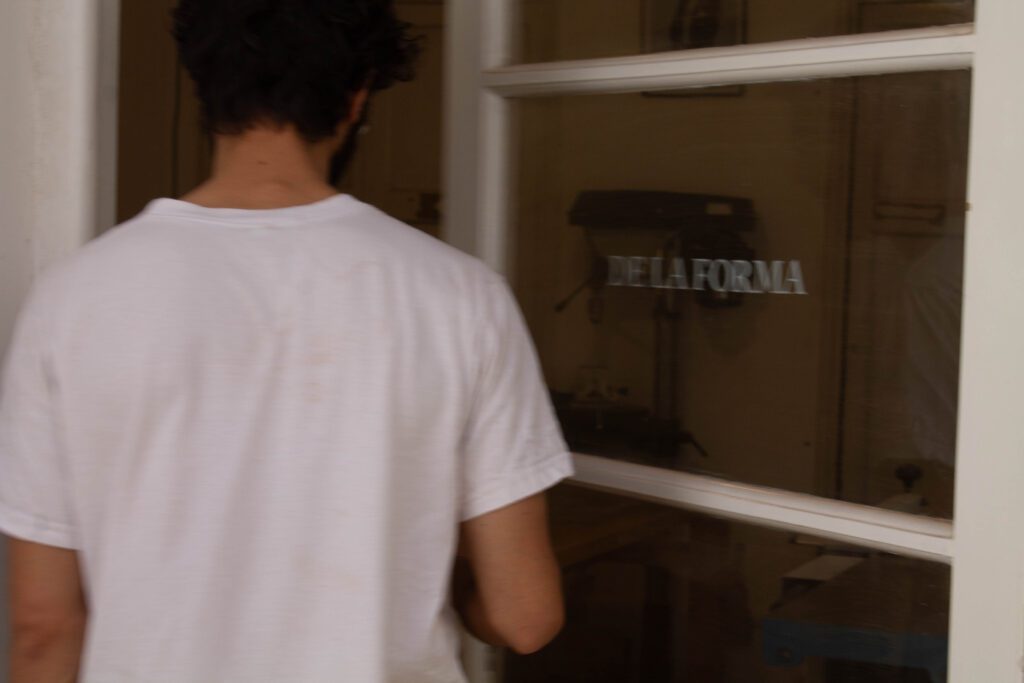
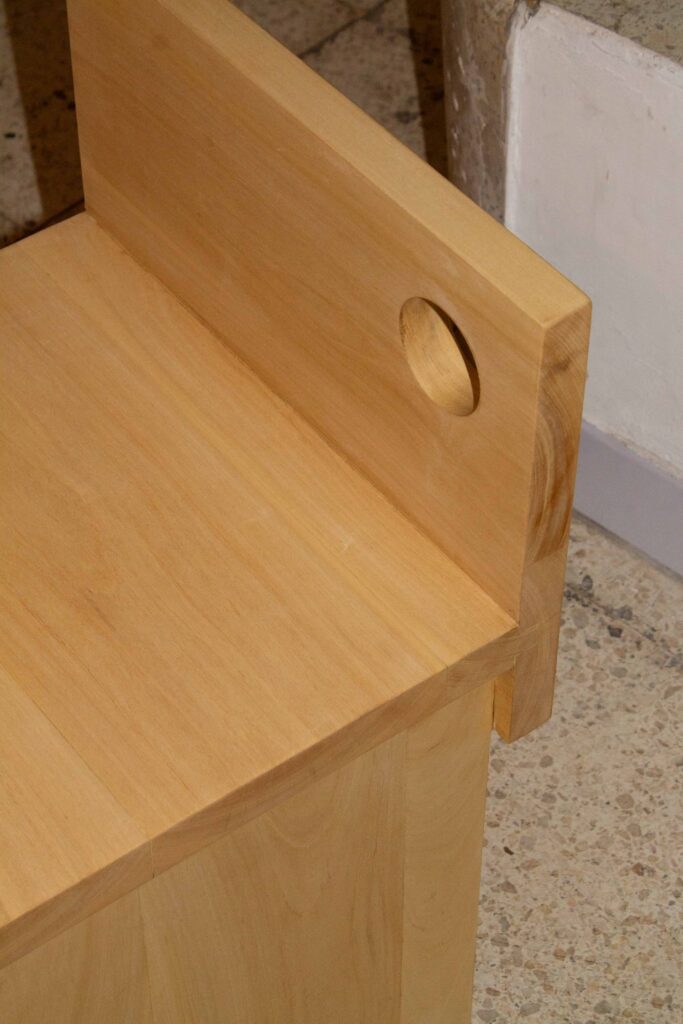
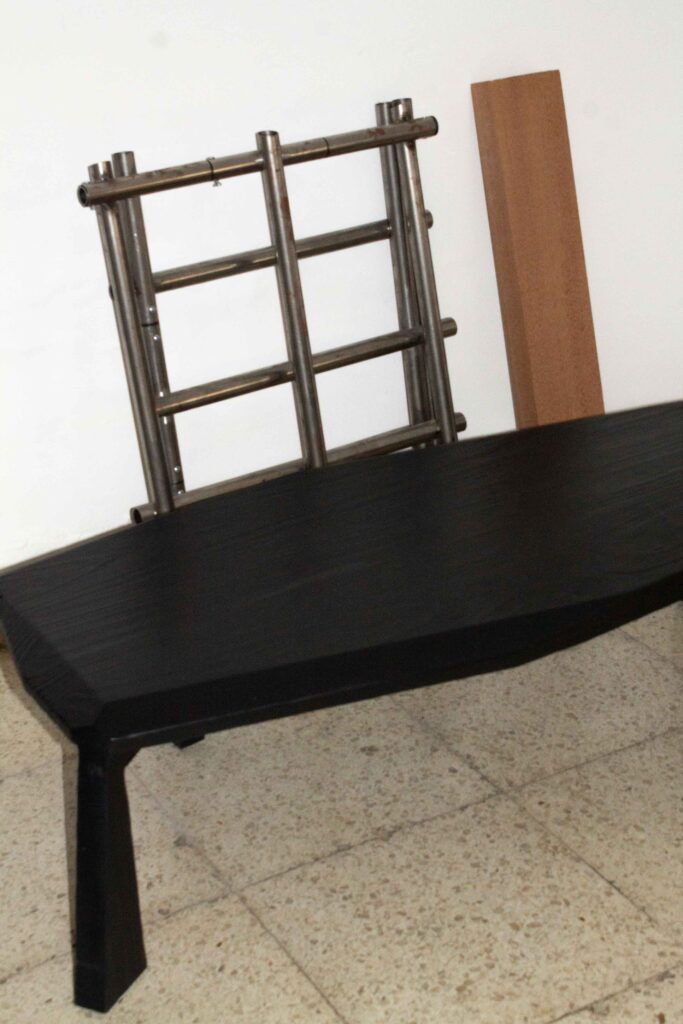
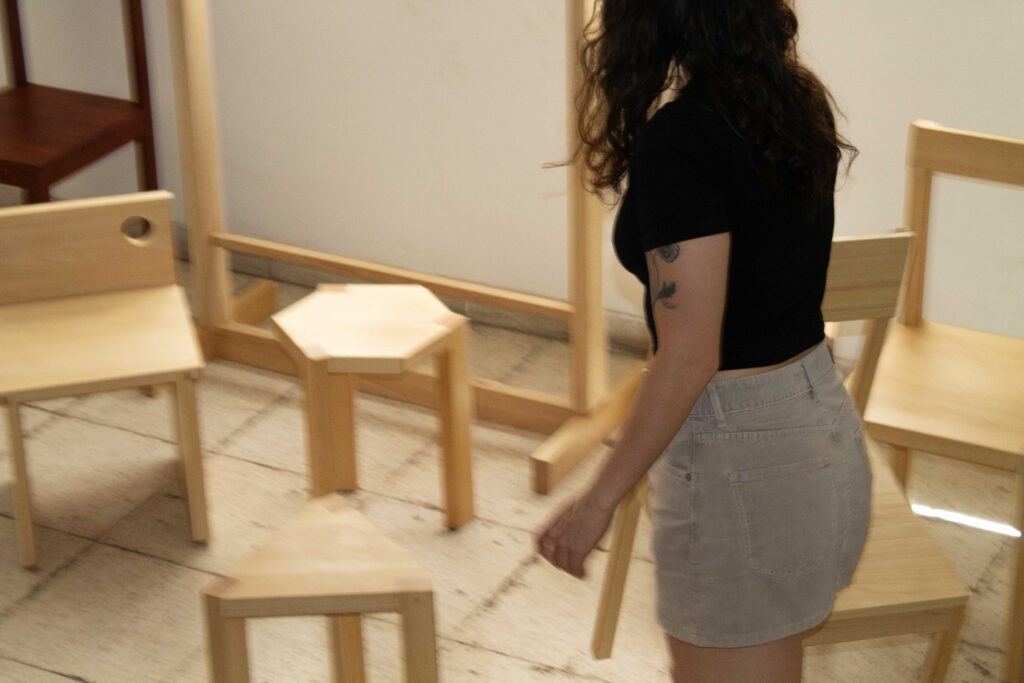
De la Forma It’s a design project focused on the creation and manufacturing of objects, born from the need to express and create through objects. Leo and Pau develop pieces through manual processes, producing each object themselves in their workshop, in Córdoba, Argentina. Their work is based on closeness to the process, small-scale production, and the construction of their own language that runs through all their objects, even when they’re designed for different uses, contexts, or clients.
Repose: How would you describe what you do?
Pau: We are industrial designers. We want to work on objects, create things, and live surrounded by objects made by us. The search is to make our own things, our objects. We also do service work for other brands like Vorágine, but primarily we make objects.
Leo: When we work with small studios just starting out, it’s like making a canvas for someone who’s going to paint, we create the skeleton and they adapt it. We immerse ourselves in the reality of who we’re designing with. If the person doesn’t have a workshop, we look for processes so they can develop the object independently afterward.
Repose: How do you let go of your design?
Leo: In the design process, we like interdisciplinary work. We present a first concept to the client, and a dialogue begins so they can appropriate it and modify it. That comes from the confidence we have in our own identity, it allows us space to work with other professionals.
Pau: We believe the object never loses our language. We always leave a trace in each object, even though it’s designed for a specific person and context. That shared language, you can’t separate yourself from it.
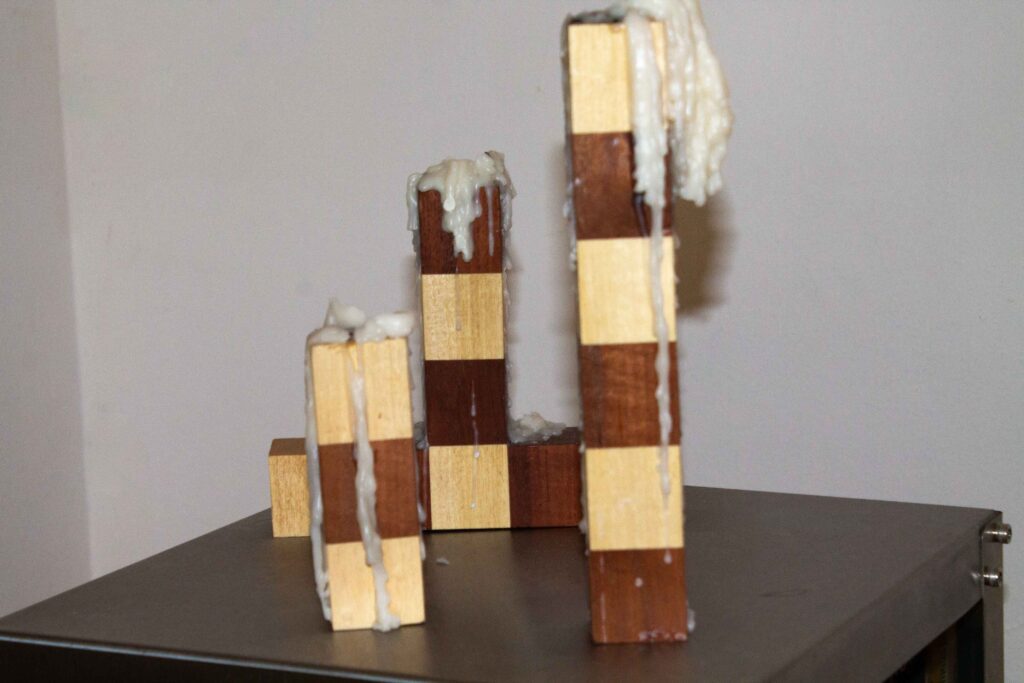
Leo: When you see it in retrospect, certain gestures remain from specific moments we’re going through. For example, that shelf was one of our first products. Today, since we’re going very much toward wood, a product wouldn’t be the same as when we started.
Repose: What led you to start this project?
Pau: We started out of necessity for work, but also because when expressing yourself through objects, if you’re not doing it very closely, a lot of the expression is lost. Luckily Leo is good at what he does.
Leo: I have a dilemma between art and design. Industrial design somehow killed the artistic part of objects, like making a bench isn’t making art. But we don’t feel it that way. When producing, we feel we have to get into the process. There’s feedback that comes from the making itself.
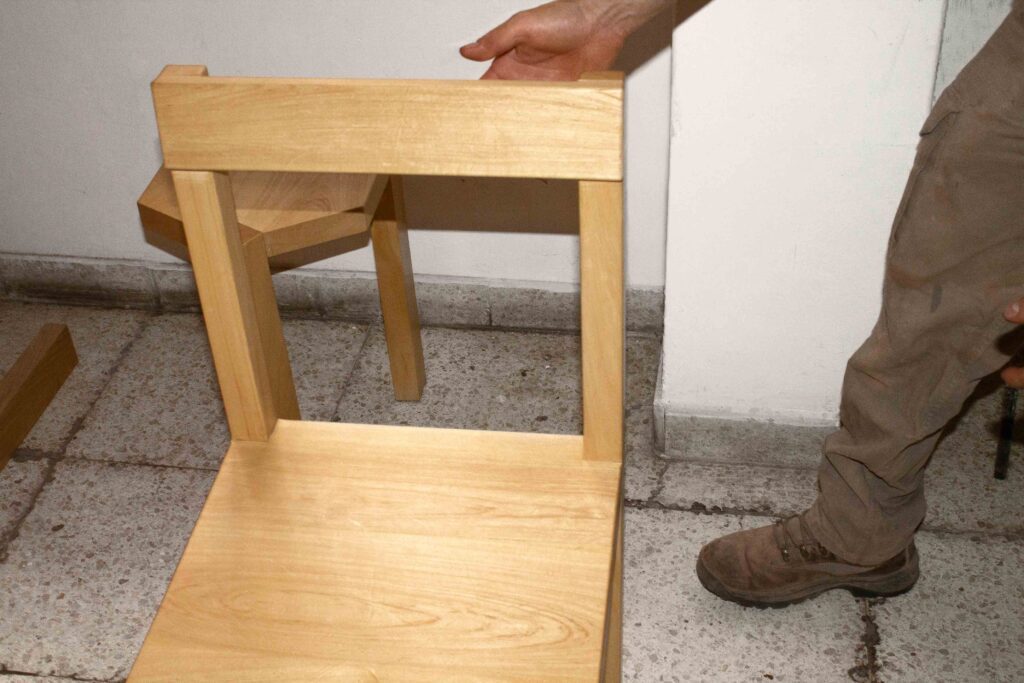
Pau: You become self-referential, looking for references within your own work, within the same gesture of making a joint or working wood a certain way. It’s constant feedback. Yesterday we were working on benches for Artífice and discovered it has the same joint as another object, but we never noticed before. I always wanted a furniture project. I like interiorism, creating from that place. But we were missing that complete service, we kept having to modify designs based on what’s easiest or most economical when working with other suppliers. Everything got polished and resolved the same way.
So little by little we decided to take charge of production. It was a huge change, suddenly you’re responsible not just for design, but for how to manufacture it with the tools you have. At the time it was very artisanal, but Leo is extremely meticulous and put in a lot of enthusiasm. That made us grow a ton in one year.
Repose: The furniture world in Argentina, the niche is very small, right?
Pau: Yes, there’s a lot of competition. Many people making furniture. You have to find over time that proposal that makes you different, and that’s also comfortable for you because it comes from you.
Leo: In the market you compete with products manufactured on such a large scale. If you want to match them in price, manual manufacturing is another thing entirely. People buy a lot by price. Even we, when we buy, buy by price. We can’t lower prices because it’s just me alone in the workshop and her alone in design. As two people, the structure doesn’t allow us to lower costs. But for me, the value of the human and handmade has to be there, as neat as possible.
Repose: How did you come up with the concept your products have?
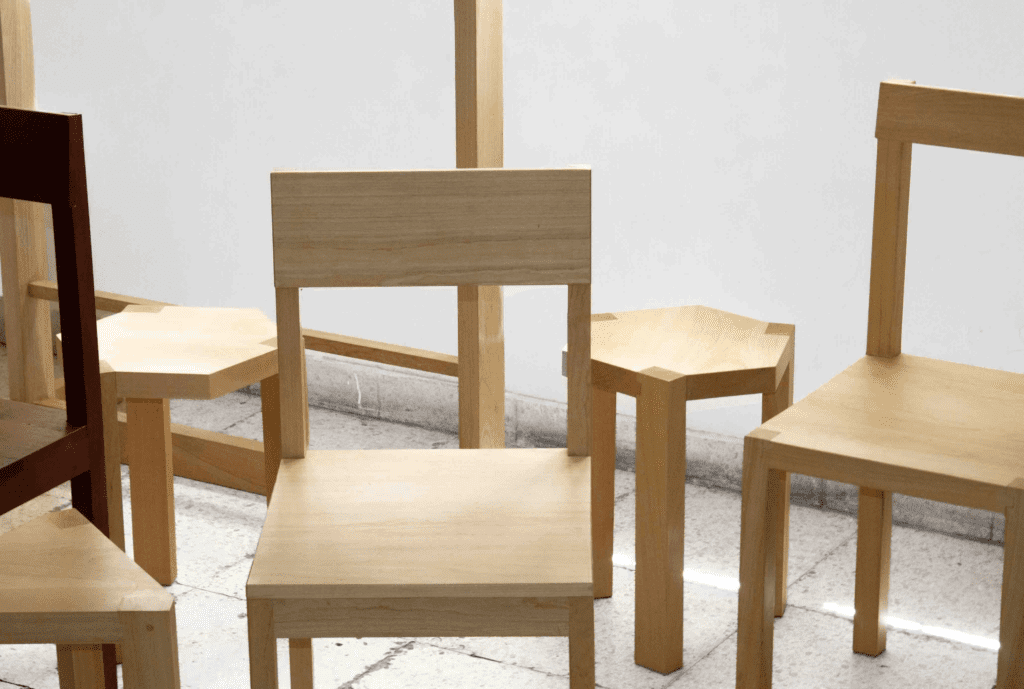
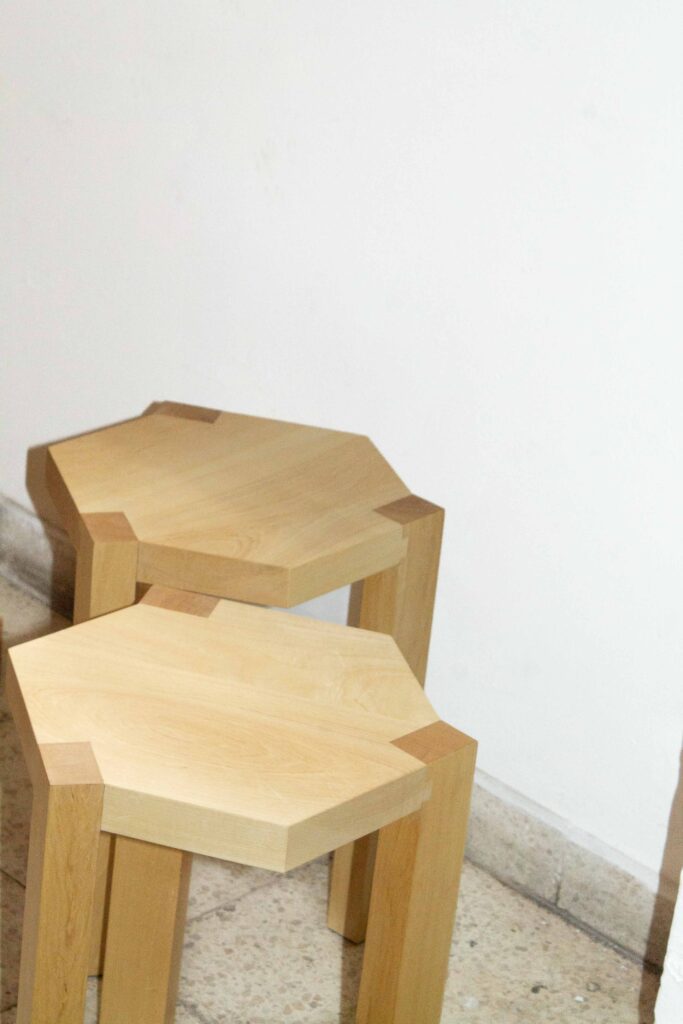
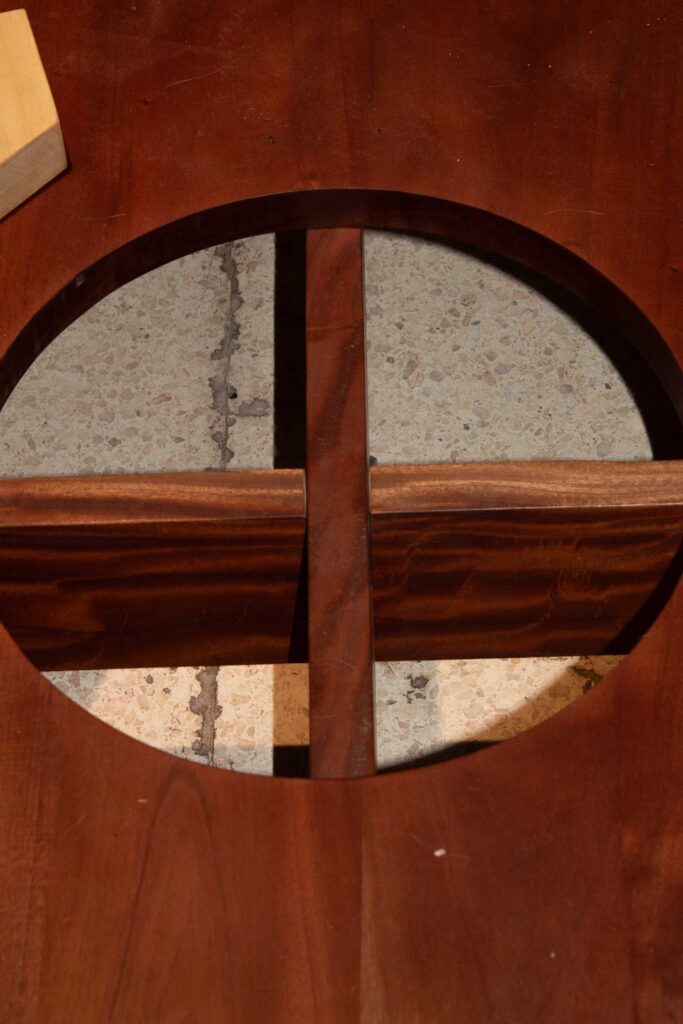
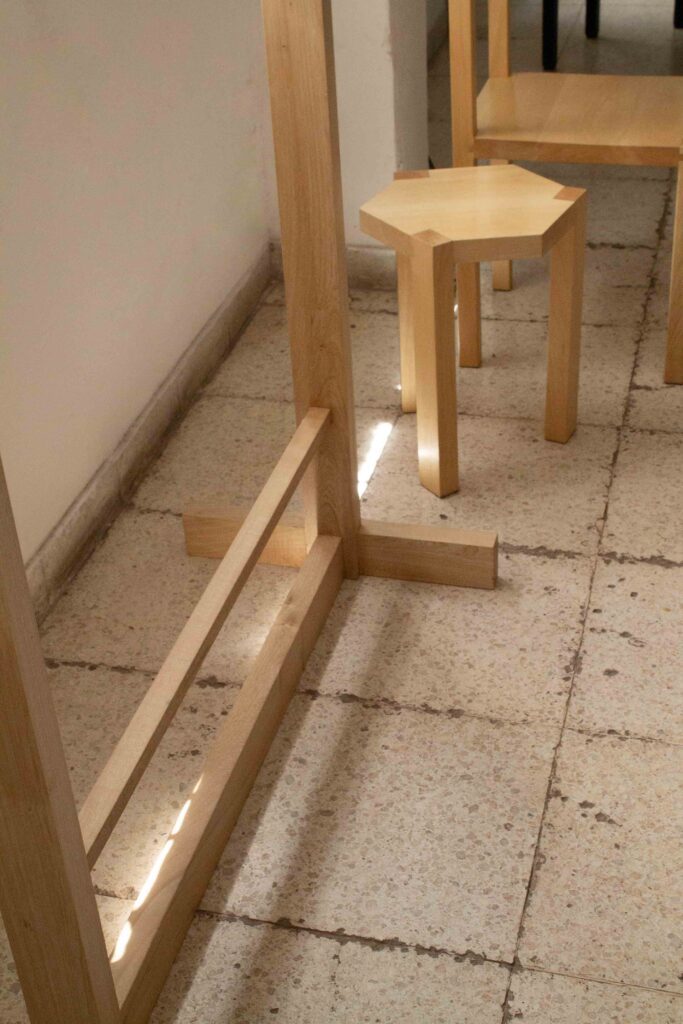
Pau: We based it on following elementary basic forms, applying them to products, and seeing how those forms transform, through destruction, intersecting, etc. Through those forms you create different gestures of utility, functionality, decoration. Today we’re very much about revealing the structure, leaving it visible, using screws, joints. That generates a language and it’s easy to keep reproducing because the structure always has to be there. We leave it visible and it’s part of our expression.
Leo: Also creating from what we have at hand and using it to our advantage. We started with a handsaw. If I had said I don’t have such-and-such thing, I wouldn’t have done anything. We immerse ourselves completely in the whole process.
Repose: What other difficulties did you find starting the project?
Leo: Many difficulties, especially in Argentina’s economic context. But I think the difficulty is finding people who value the work you’re doing, finding people who give you that vote of confidence.
Pau: It’s happening very slowly. We don’t just stay in our work, we go to shows, we organized Armario, we gave a talk at Comité, they called us for Mexico. We keep having small opportunities to show things and people are impressed by what they can’t see behind photos and social media. It’s a great difficulty because it takes time away from work. We sometimes dedicate weeks to making an object for a show, but we know there’s repercussion later where people place that vote of value and trust.
Repose: What excites you most about projects nowadays?
Pau: I do the modeling, work with the client, and the moment I go to the workshop and the object is there, it’s a wow sensation. I can’t believe it materialized and doubled down on what I imagined. It’s even better. When I like the modeling and then see it live with all the texture, wood, material, shine, real size, proportions, that moment excites me.
Leo: Mine relates to cabinetry. In each job we try to evolve. In each object I try something new. It excites me to try things and see the evolution.
Repose: Do you face problems communicating the project?
Pau: Yes, thousands. We don’t produce stock, so it’s difficult to categorize the project type. I tried e-commerce, opened a Tienda Nube, but it has nothing to do with us, Mercado Pago, installments, shipping. Everything we do is step by step, very personal and artisanal. One way I found to communicate is day-to-day, recording and showing the whole process. People’s reaction,”what’s up, what is that, how did you do it?”, I feed off that. Now I made a new website where you enter the object, see details and price, and go directly to my number. I want that channel with that person, “I want your bench, can I do it in another wood? Let’s talk about this.” Maybe I’m intense, maybe people just want to click and buy.
Leo: But a page where you click and buy, maybe we lose sales, but that’s not us. This way, the client we’re looking for reaches us. Those who arrive through a product but want to modify it, and a dialogue begins. New designs emerge. When offering a service, we want that if you want a table, it’s really what you want, what works for you, not just what’s available.
Pau: That back-and-forth is what we enjoy a lot. Tell me where the table is going, what’s around it. Sometimes I ask for photos, I want to give my opinion because the object will be yours, but it’s something of mine that’s there. There’s no other way to do that without direct back-and-forth. When the scale expands, if we expand, one fear I have is losing this, being able to get up and see what Leo’s doing in the workshop. It has to be close.
Repose: Does the client end up understanding that value?
Pau: People immersed in the design process understand it more deeply, not just architects and designers, but artists, photographers. All of them are always blown away. If we want to expand and reach a broader audience, I still have to discover how to sustain that smallness.
Repose: Did your vision change for people to understand it, or did you stay the same?
Pau: We always stayed the same. Simply more people reached us through shows and word of mouth.
Leo: On Instagram, we don’t use language that isn’t ours. We use common vocabulary, the one we use. As transparent as possible.
Pau: I like to understand Instagram as a logbook, if you go back, you see the process getting finer, more complex, adding quality. We try to let the product speak for itself. It’s really important to revalue this, we’re two people and that’s the reality. That also educates the client when understanding who they’re talking to. Maintaining that artisanal quality that the objects have also in communication.
Leo: We get orders where we can’t fulfill them, wrong tools, size, timing. And it’s like hey look, we can’t do it. What I can do is this. Being transparent.
Repose: You stay true to what you want to do in design. How do you do that when producing for clients?
Leo: We try to reach an agreement between what the client wants and what we want. At the end of the day, we have the last word, we decide if we do something or not.
Pau: People are flooded with Pinterest references. When we tell the client we do this, we have this chair, we guide them and end up doing what we like. That’s fantastic.
The client feels like you’re paying attention, that they can get involved. Obviously that takes time, you have to be willing, but results are always good when things are done with time. Time, tranquility, slowness, things that don’t fit in today’s world. Transmitting that seems totally important. Going against all this vortex. Transmitting time, quality, that there’s only one person working behind it.
Repose: What advice would you give yourselves when you started?
Leo: Keep doing what you’re doing! We don’t regret what we do. Obviously day-to-day makes you say “what’s up,” but we don’t regret it. We chose it.
Pau: Don’t overthink so much what you’re about to do. I doubt a lot, I’m very insecure, so I’d say: trust what you’re doing. At some point someone will understand it.
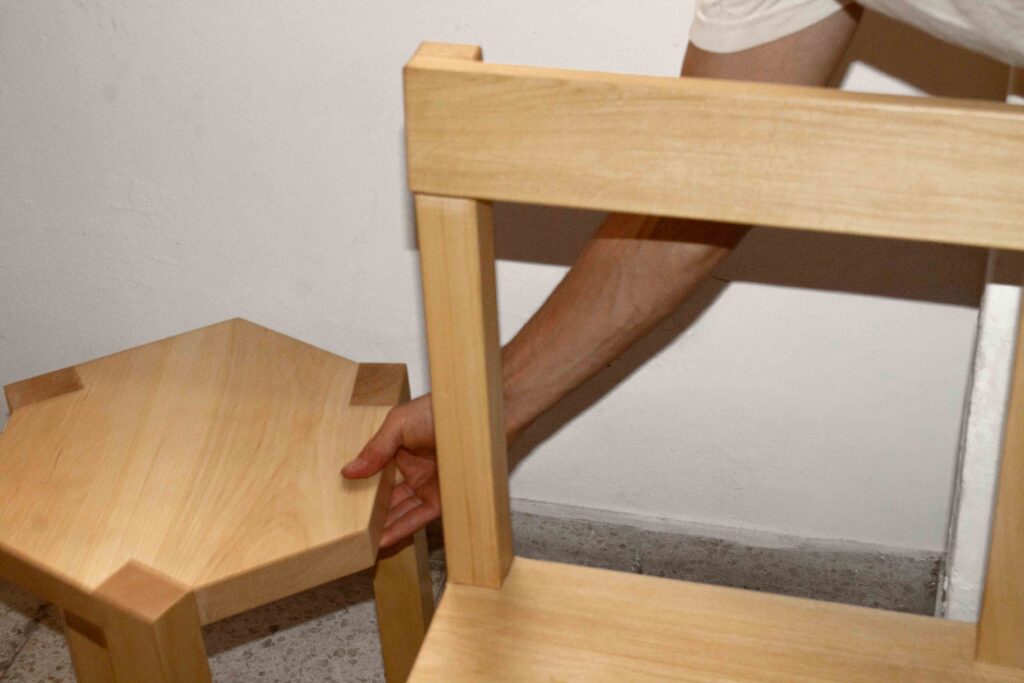
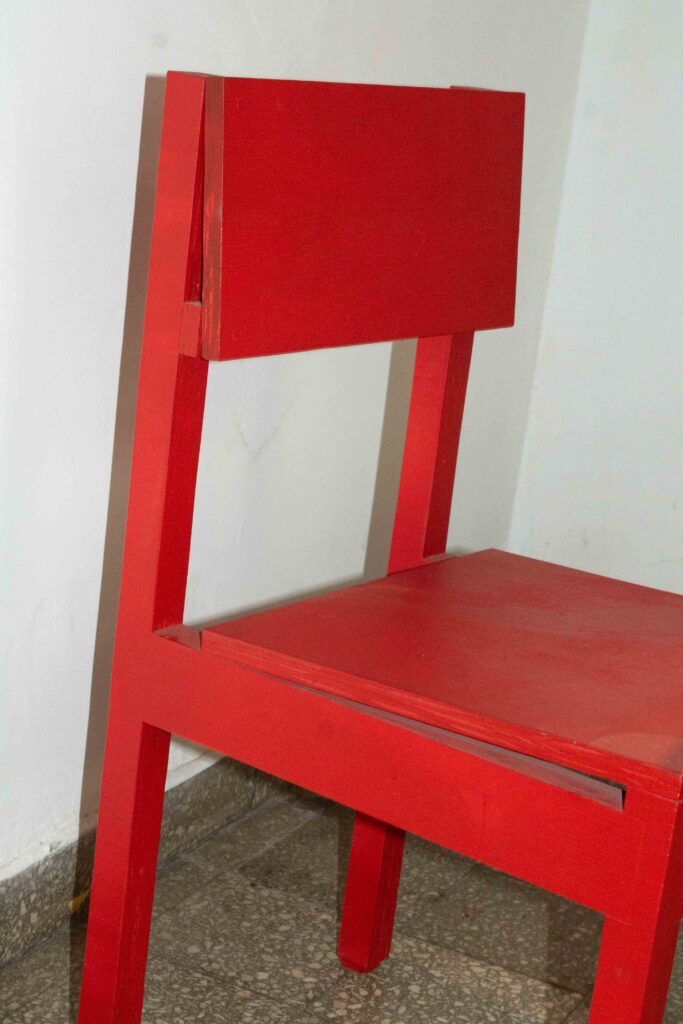
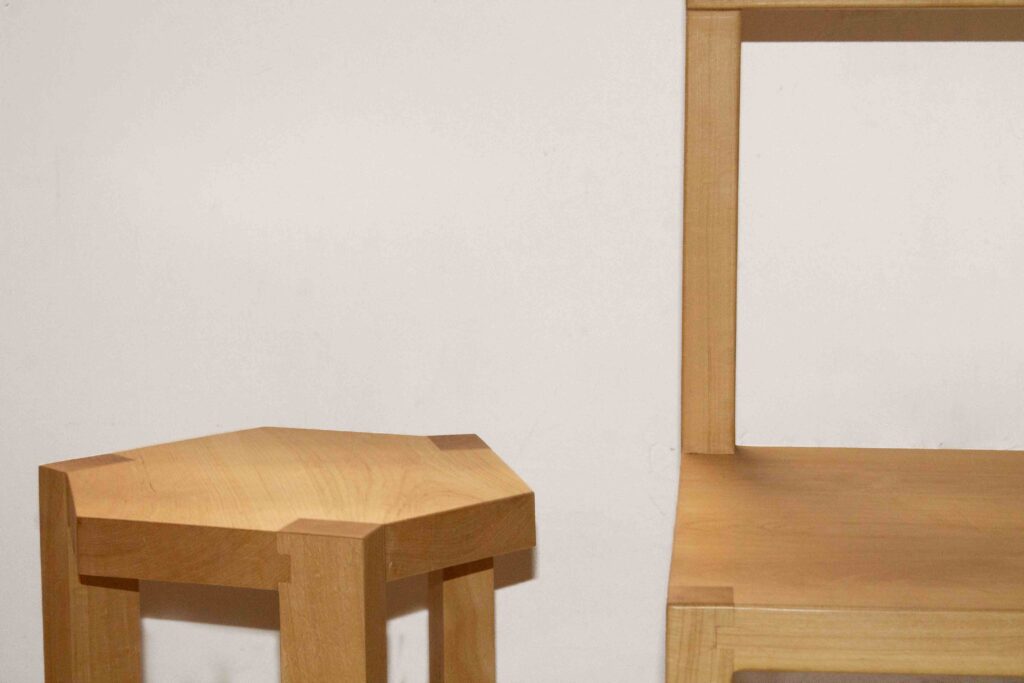
Repose Archive is a creative direction journal documenting processes and projects across art, design, architecture, and hospitality. As designers, we interview creative minds and explore purposeful creation. Photography credits: Repose.