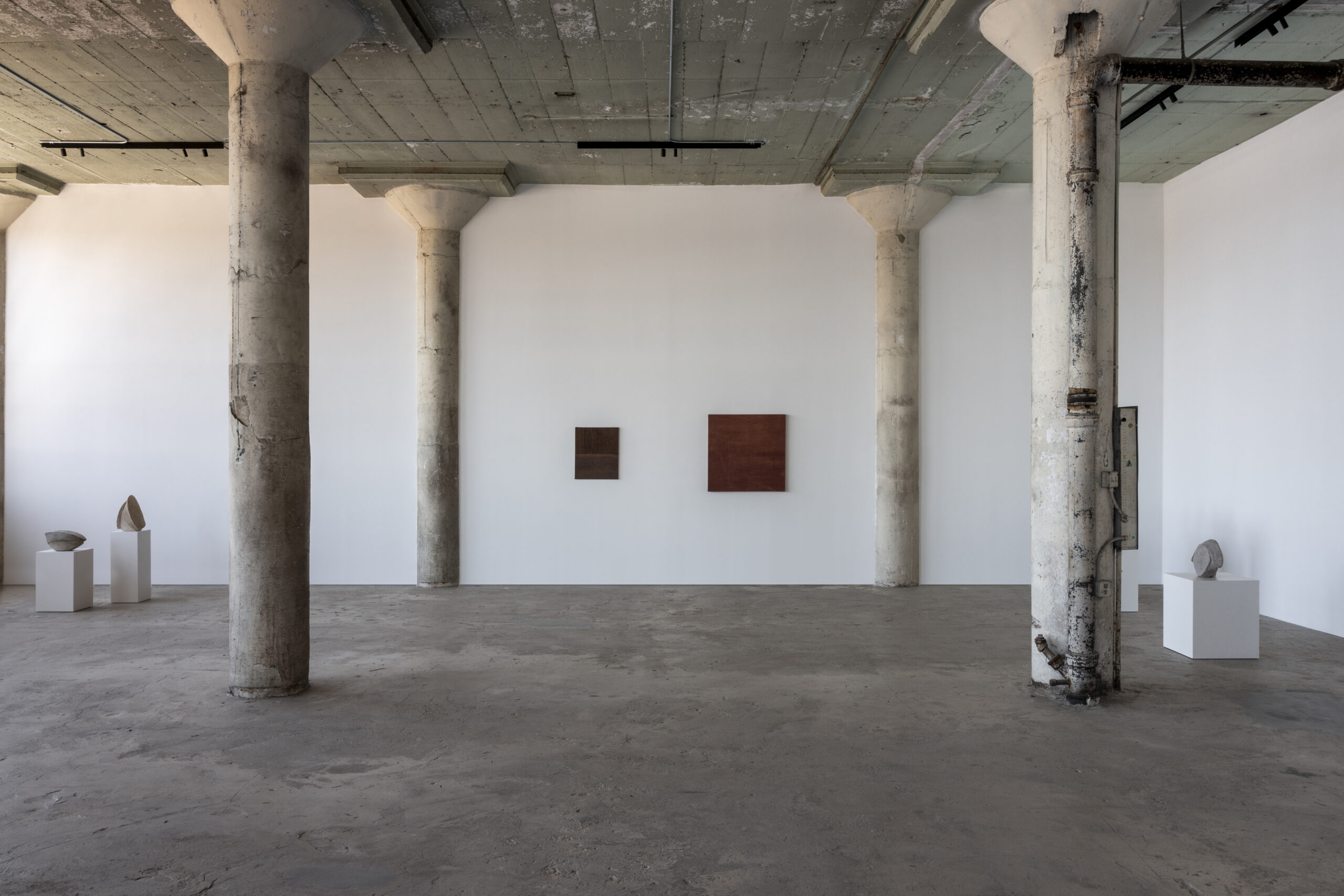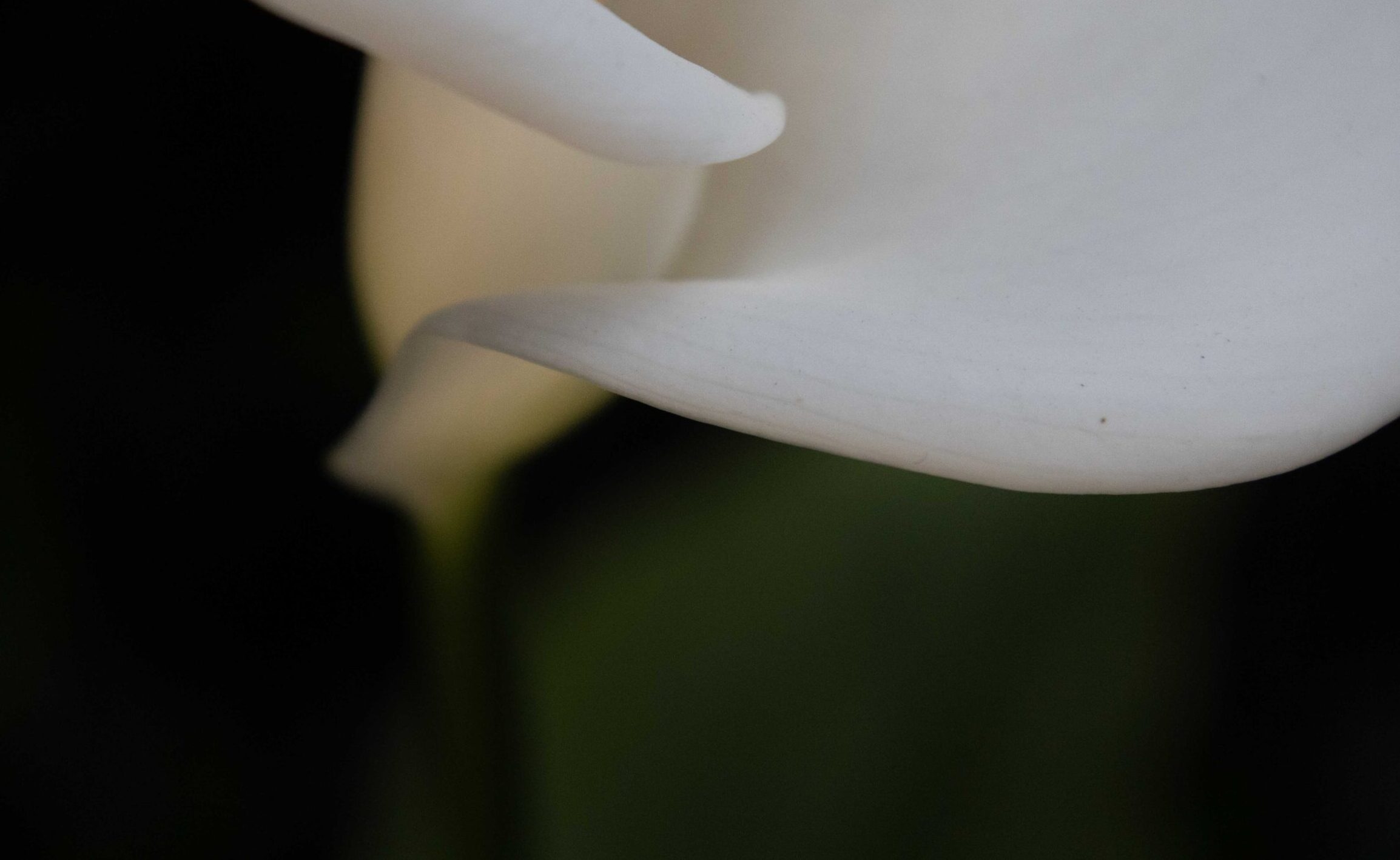

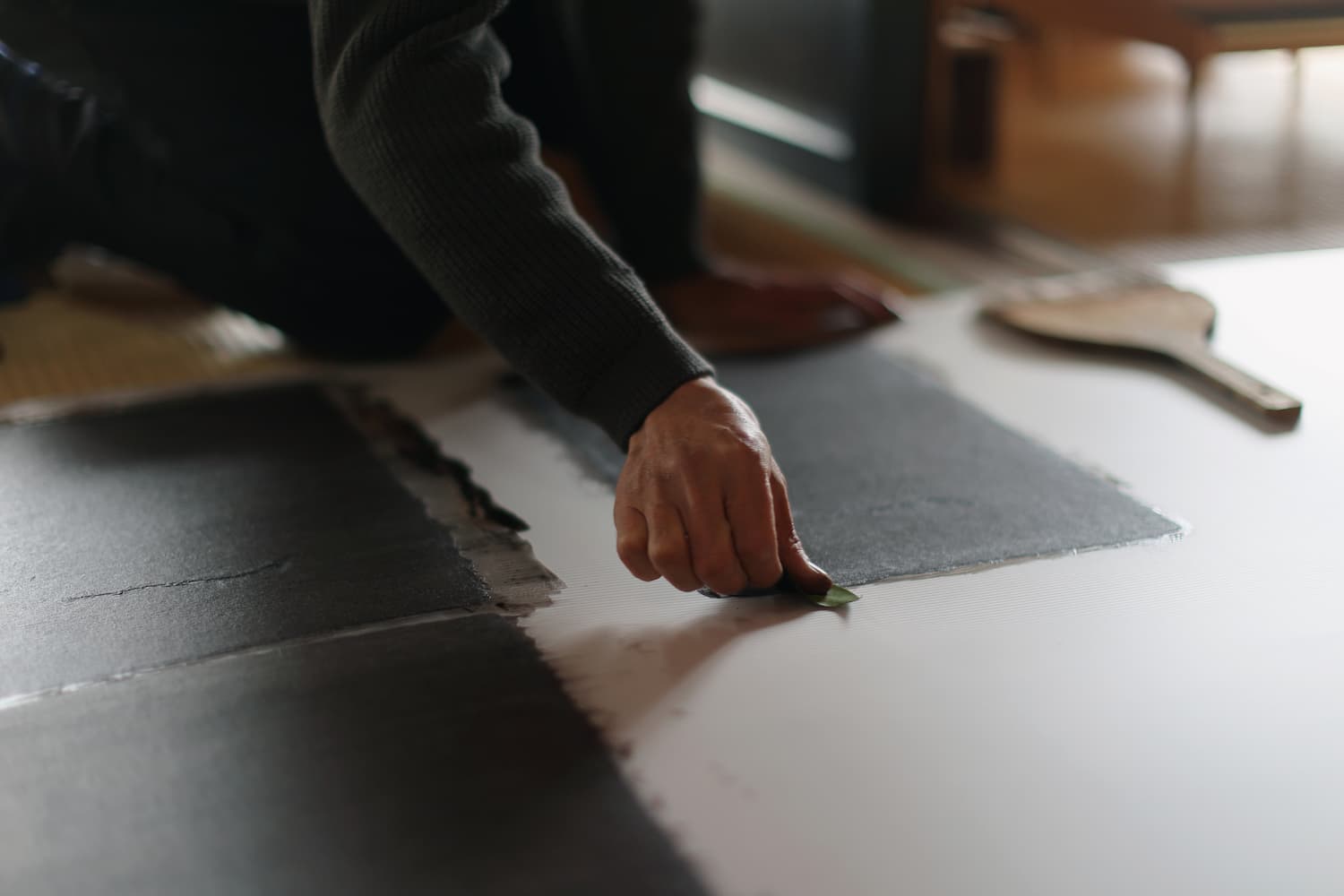
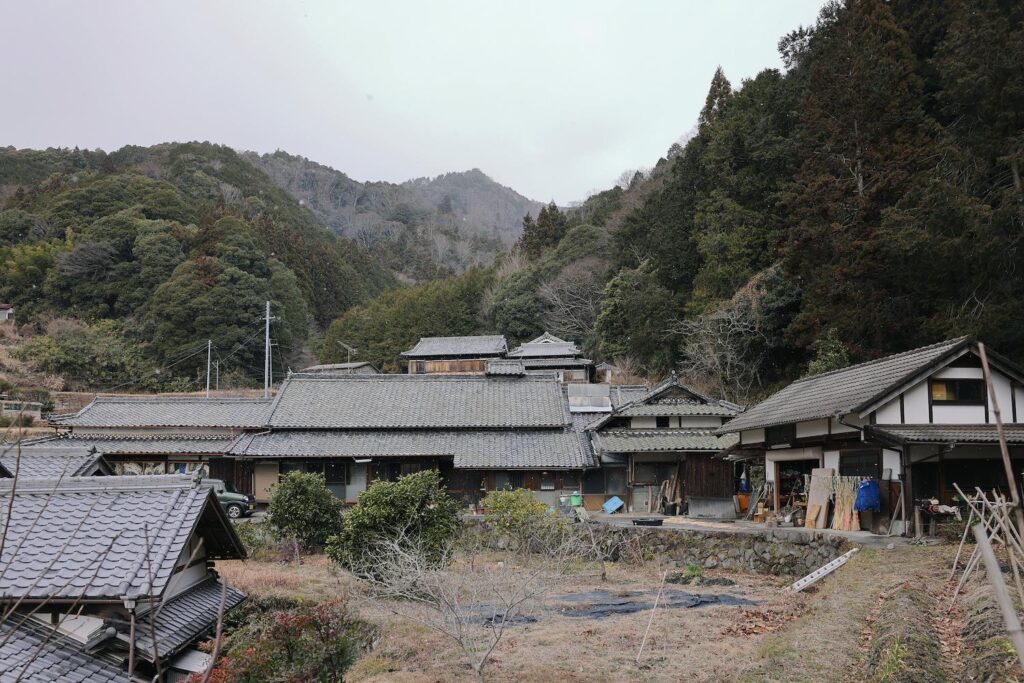
Isamu Hazama is a Japanese artist based in Wakayama. He creates objects, books, and works from materials found in the satoyama areas around him, responding to each one as it appears through the seasons. His practice is inseparable from the place he lives: the forests, the neighbors, the knowledge that disappears with each generation. In our conversation, he shared how making became a way of learning, and what it means to carry the memories of a place through your hands. (Cover photography by Itsuko Shimizu)
Repose: How would you describe what you do?
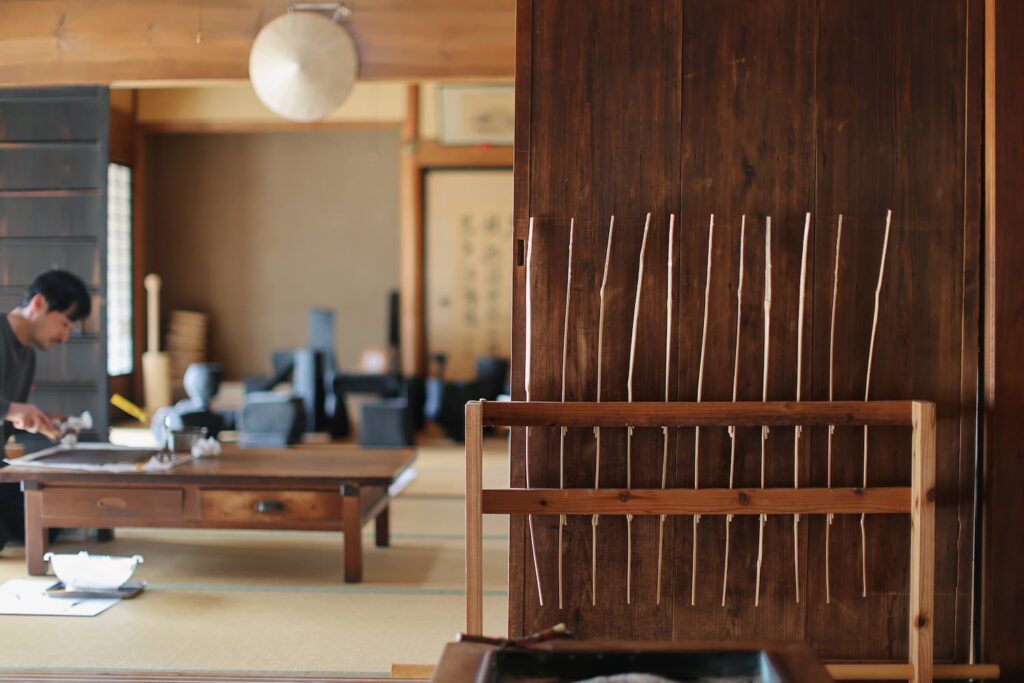
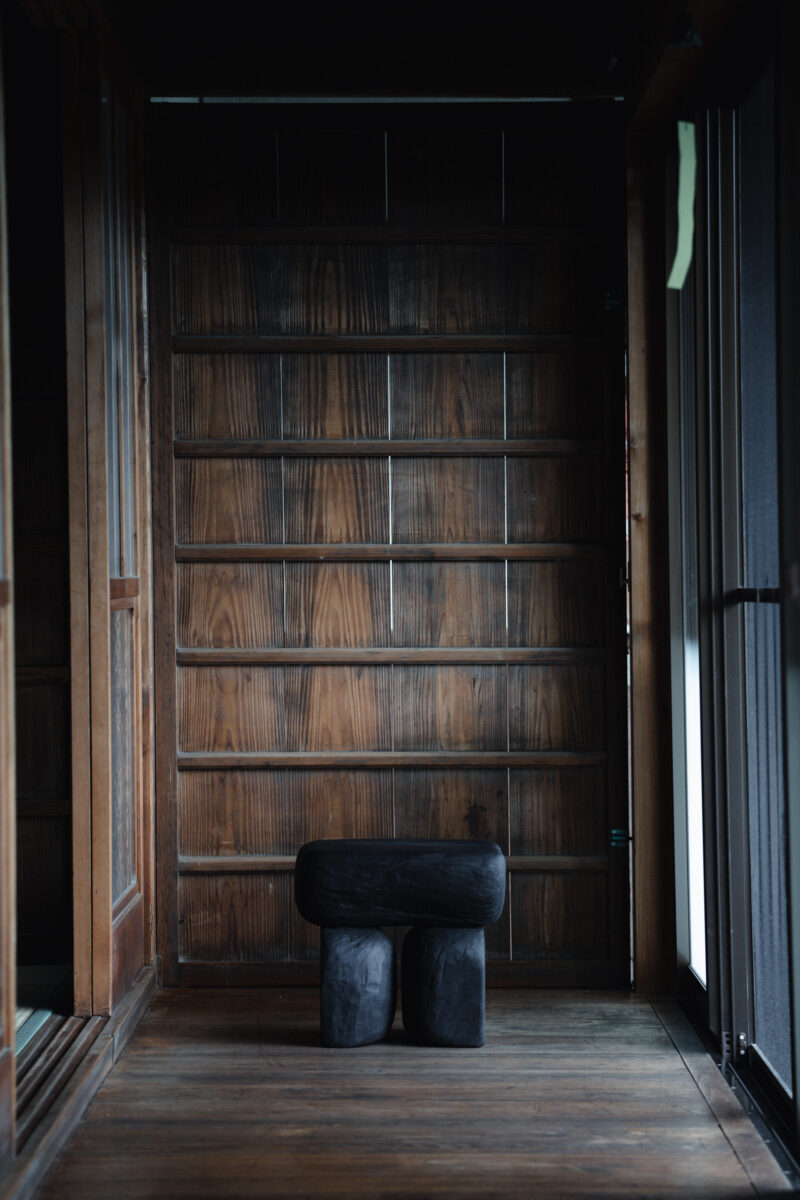
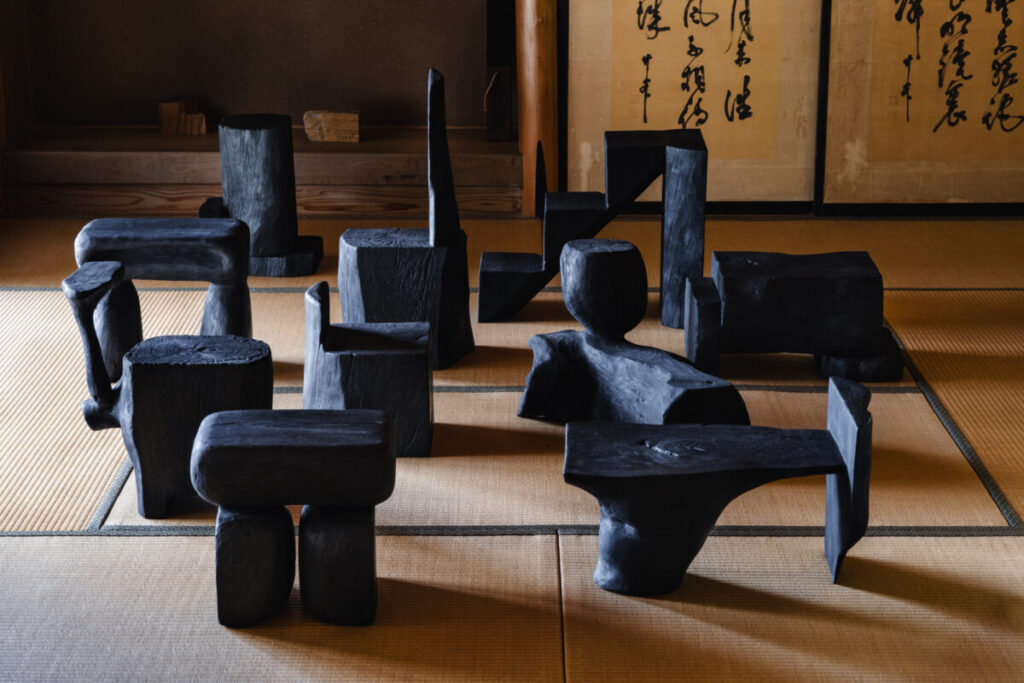
Isamu: I live in a small mountain village in Japan, where I create objects, books, and other works from materials found close at hand. Rather than working within a fixed medium, I respond to materials as they appear through the seasons, much like a farmer responding to the land. For me, making is also a way of learning. Through the act of working with materials, I encounter the memories, knowledge, and wisdom they carry, and I translate these encounters back into my work.
Repose: What led you to start a personal project?
Isamu: The project began quite naturally when I moved here. Having grown up in a city, everything I encountered in rural mountain life felt new to me: the materials, the landscape, the seasonal changes, and the way people related to their environment.
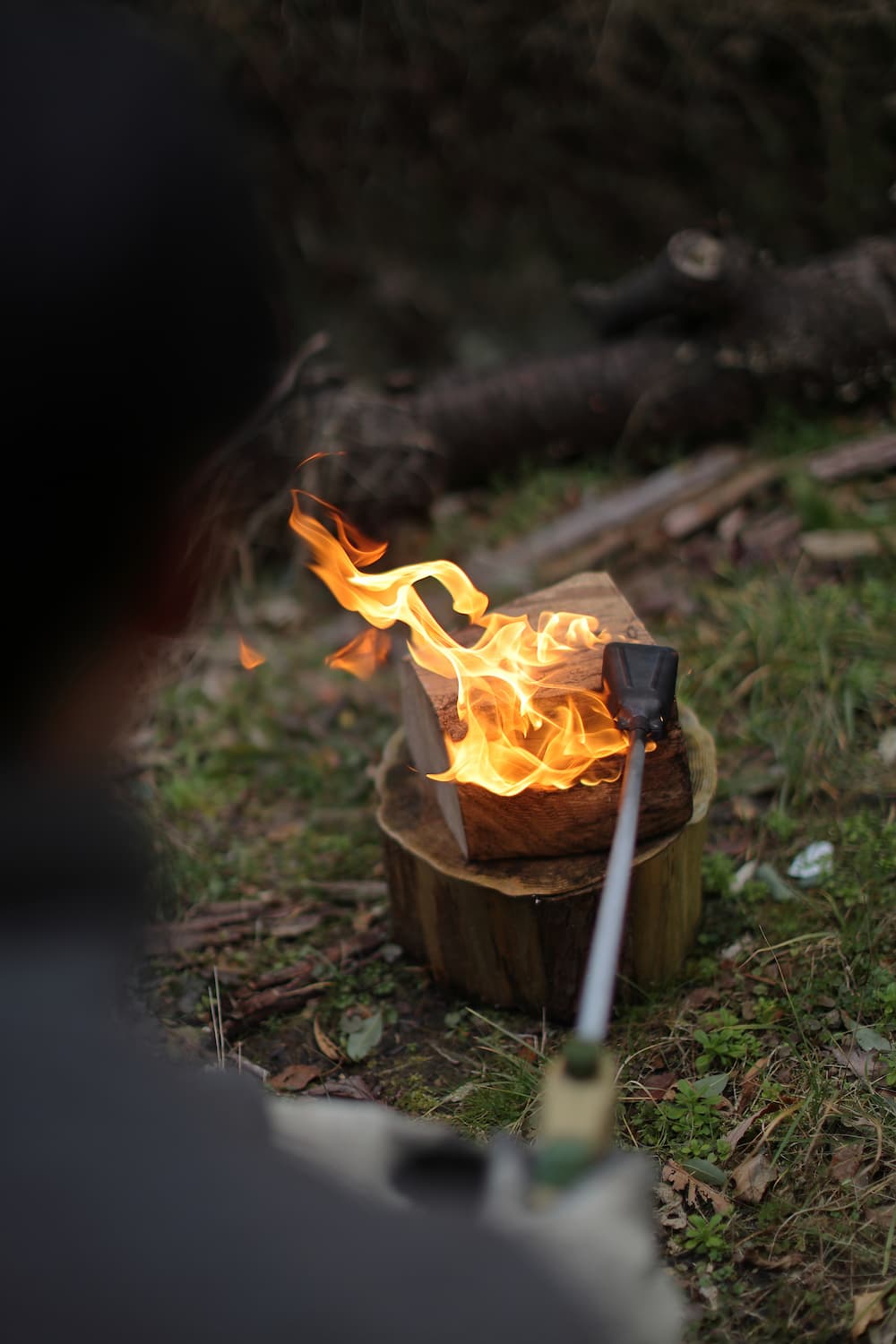
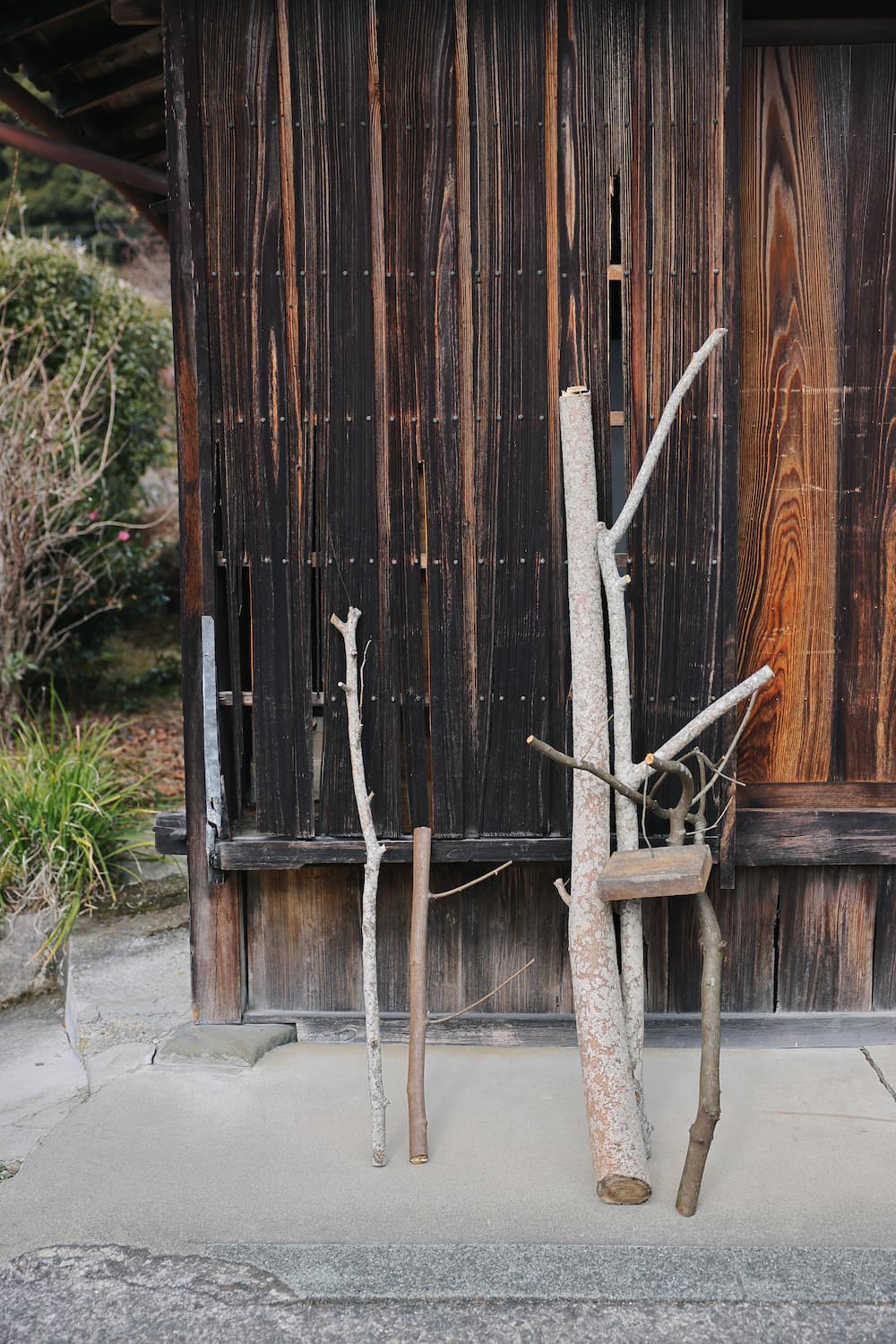
At first, I simply observed what was around me and listened to local people. At one point, a neighbor gave me some sugi logs. Then I began splitting, cutting, touching, and observing the wood, almost like a child playing. Through this very direct contact with the material, I started to understand that making could also become a way of learning.
What interested me most was that the materials were not just physical resources. They carried memories, stories, and practical wisdom connected to local ways of life before modernization. Many of these stories are now disappearing because of aging and depopulation. So the project gradually became a way for me to learn from this knowledge, preserve it in some form, and reinterpret it through my work.
Repose: How did the idea for this project come about?
Isamu: The idea came quite naturally from living in the mountains. In this environment, I often come across different materials in everyday life. Sometimes I find them while maintaining the forest, and sometimes they are given to me by neighbors.
When I encounter a material, I usually begin with simple curiosity. I research the history behind it, how it has been used, and what kinds of memories or knowledge are connected to it. As I learn more, I often feel that these stories should be preserved in some form. In that sense, the project did not begin from a fixed concept. It began more as a response to the materials.
Repose: In what ways does your culture, surroundings and background shape your creative practice?
Isamu: My culture, surroundings, and background are essential to my creative practice. They often provide the first clues for my work, through observation, experience, or casual conversations with neighbors.
Rather than using materials simply to express my own ideas, I am interested in translating the context through my own way. For me, culture, surroundings, and background are not just external influences. They are part of the outcome, and they shape the way I work.
Repose: What challenges did you face when starting the project or trying to make a living from creativity?
Isamu: In my case, I do both commissioned work and personal projects. I mainly make a living through commissioned work, but the attitude behind both is quite similar. The difference is whether the assignment comes from a client or from a material.
I do not think financial reward alone can sustain creative motivation. But its stability gives me the space and concentration needed to keep making work. Thinking about earning could be stressful, but it is also a necessary condition for continuing the practice.
Repose: Do you face any challenges when communicating your project? Which ones?
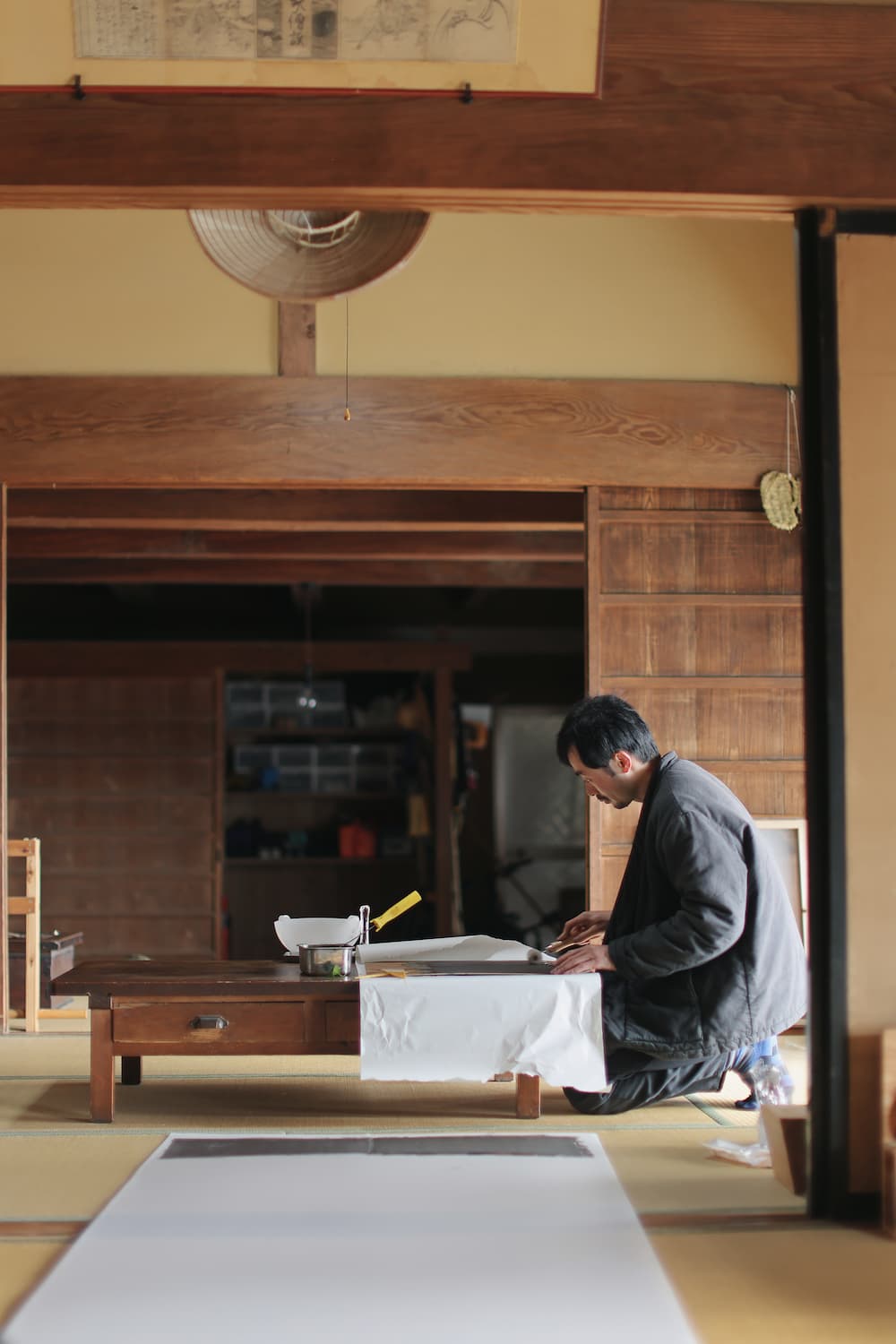
Isamu: One challenge is that people sometimes want to put my work in a specific category. They ask whether it is furniture or object, design or art. For me, it is important to deliberately avoid setting clear boundaries. I would say that I want to live like a hyakusho, a traditional Japanese farmer. This may sound weird, but it comes from my respect for the elderly farmers around me.
A hyakusho is creative. They respond constantly to sunlight, wind, temperature, insects, wild boars, and many other conditions beyond human control. They become craftspersons who make the tools they need, and sometimes even architects who build small huts near their fields. They carry a wide range of knowledge necessary for living.
A hyakusho is tough and flexible. They wake up early and use both their body and mind throughout the day to grow crops. They do not think only with their head; they work while sensing nature through their body. Their movements are never wasteful, so that they can keep working for a long time. I often find each gesture beautiful.
A hyakusho is positive. Even while carrying the constant risks of typhoons, pests, or natural disasters, they make plans and sow seeds with the hope that crops will grow and ripen. Things do not always go according to plan, so they keep observing every day, sometimes adjusting their plans, and waiting for the harvest.
A hyakusho nourishes people. Through the crops they harvest, they give people the joy of eating and support their health. My work cannot nourish the body in the same way, but I hope it can offer a kind of nourishment for the mind.
Repose: Do you feel that the public understands the idea, concept, and value behind your work?
Isamu: I find this question difficult to answer, so I would prefer to leave it open. My focus is more on continuing the work and allowing people to encounter it in their own way.
Repose: Now that your project is real and up and running, do you think it still embodies the essence of the original idea?
Isamu: I do not think there was a clearly defined original idea at the beginning. The project began very naturally through my life, as I encountered materials around me and responded to them through making.
For that reason, I do not see the project as something that needs to stay faithful to an original concept. What has remained consistent is more of an attitude: staying open, observing carefully, and responding to materials, place, and people.
Repose: What would you tell the person you were when you started this project?
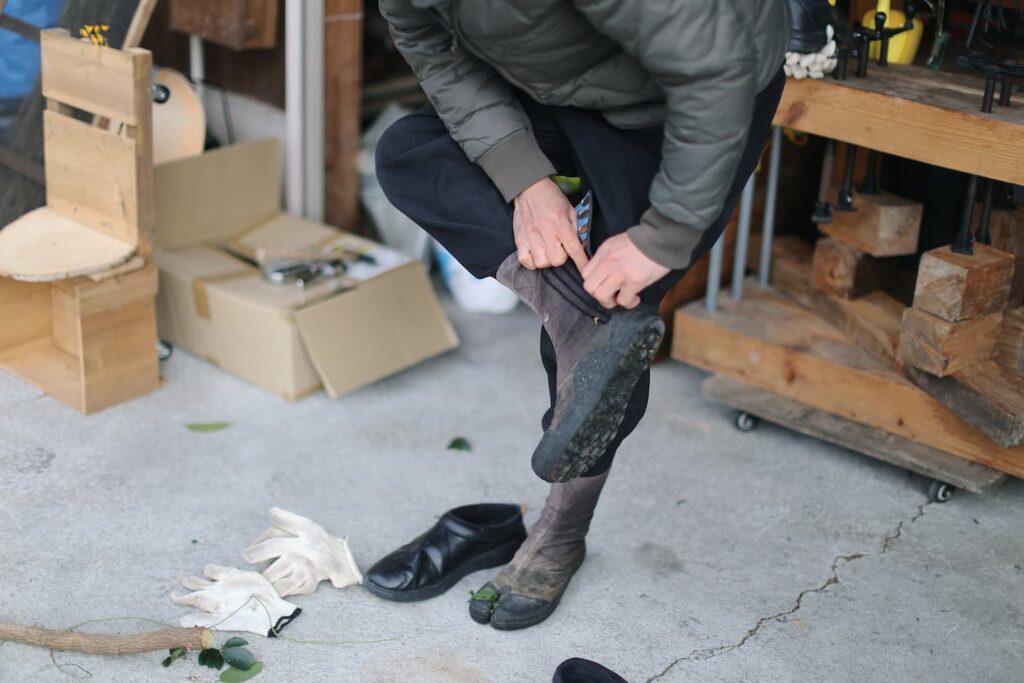
Isamu: Get your hands dirty. Make a lot of mistakes. That’s how you learn.
Repose: What excites you most about your current project and the future?
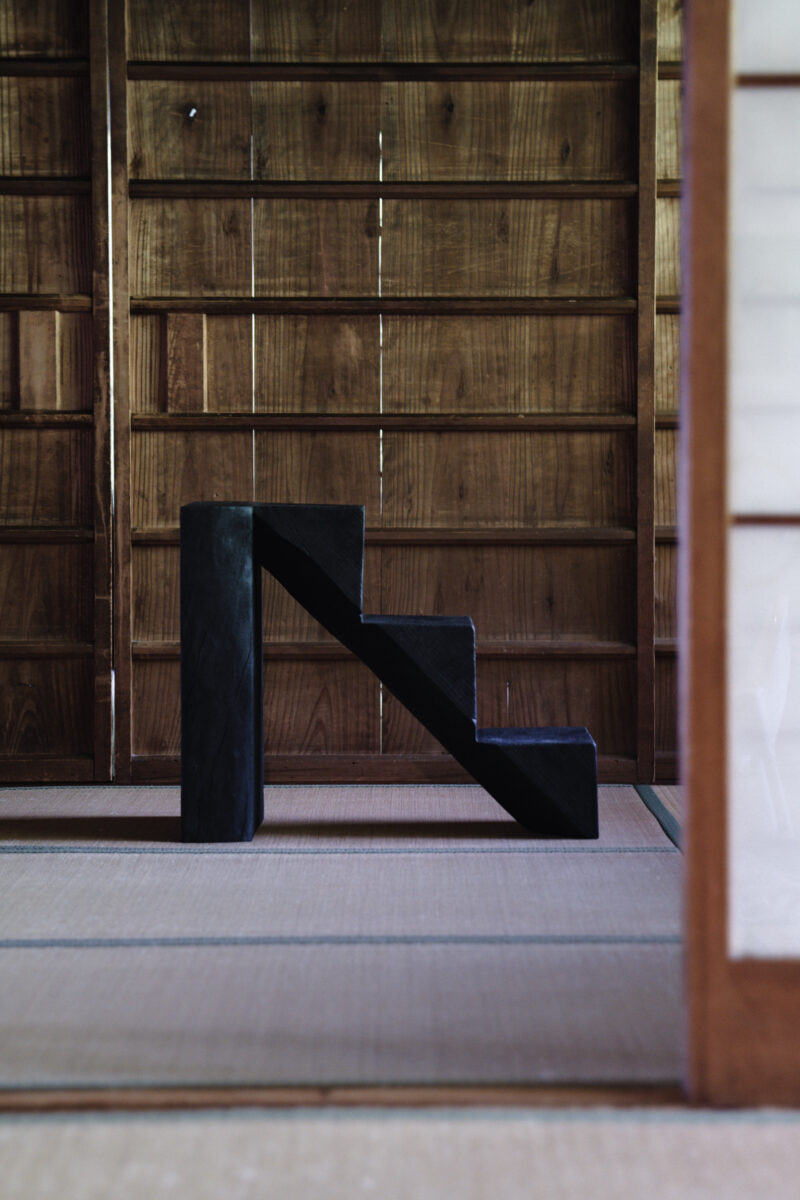
Isamu: I prefer to work in a kind of improvisational way, thinking with my hands and eyes as I make. What excites me most is the moment when a new perspective or expression emerges from that process.
Repose: Are there certain design philosophies that inspire you in particular?
Isamu: I have learned from many predecessors, so it is difficult for me to name specific philosophies. But I respect the shared attitude of those who have tried to renew our sense of beauty in every era, from Sen no Rikyū and Furuta Oribe to the avant-garde and postmodernism, to name a few.
Repose Archive is a creative direction journal documenting processes and projects across art, design, architecture, and hospitality. Photography credits: Isamu Hazama
and Itsuko Shimizu.